Hardik Gajjar Announces Two New Films Rooted in Indian History and Epic Storytelling
Filmmaker Hardik Gajjar is expanding his slate with two ambitious projects that draw on different strands of India’s storytelling heritage. Following Krishnavataram, Gajjar is set to bring Gujarat’s musical folklore to the screen with Tana Riri, before turning to the Mahabharata for Ajay Abhimanyu ki Mahabharat. The films are scheduled to arrive in cinemas in October 2027 and June 2028, respectively.
The announcements point to a varied direction for the director, whose upcoming work moves between regional history and a celebrated episode from one of India’s best-known epics. Both films are directed by Gajjar and produced by Athashrikatha Motion Pictures LLP.

Tana Riri Brings Gujarat’s Musical Legacy to the Big Screen
Set in 16th-century Gujarat, Tana Riri is inspired by the story of twin sisters Tana and Riri, who are remembered in regional tradition for their musical abilities and their connection to Vadnagar. The film reunites Gajjar with Krishnavataram actor Sanskruti Jayana, who is attached to the new project.
The sisters’ story offers the filmmakers an opportunity to explore more than a period setting. It also opens a window into Gujarat’s cultural memory, where music, local history and oral storytelling have helped preserve accounts of notable figures across generations. By adapting the tale for cinema, the production can introduce audiences beyond the region to a story that may be less familiar than the major narratives of mainstream Bollywood.
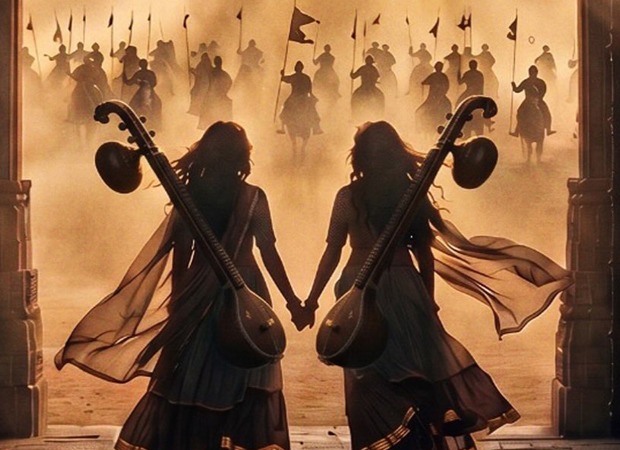
The first poster provides an early indication of the film’s visual approach. It shows the twin sisters walking through the gates of a kingdom, suggesting a historical world shaped by royal spaces, tradition and the social customs of the era. While the image offers only a brief glimpse, it establishes the film’s period atmosphere and places the sisters at the centre of its story.
The project’s musical dimension could also distinguish it from a conventional historical drama. A story associated with accomplished singers naturally invites attention to performance, sound and the role of classical music in the characters’ lives. If developed as a central part of the film’s storytelling, music may help connect the historical setting with contemporary audiences, making the sisters’ legacy accessible through both narrative and song.
A regional story with wider appeal
Films based on regional legends can broaden the range of stories reaching national audiences. Gujarat’s history and cultural traditions offer a rich source of material, yet many accounts remain known primarily through local retellings. Tana Riri has the potential to bring one such narrative to a wider cinema-going public while retaining its connection to Vadnagar and the region’s heritage.
That balance will be important: audiences often respond to historical films when they combine a compelling personal story with a clear sense of place. The sisters’ relationship, their musical identity and the world they inhabited could give the film several emotional and visual points of entry.
Ajay Abhimanyu ki Mahabharat Revisits a Defining Epic Episode
Gajjar’s second announced film, Ajay Abhimanyu ki Mahabharat, turns from Gujarat’s folklore to the Mahabharata. The story will centre on Abhimanyu, the young warrior whose bravery and sacrifice during the Kurukshetra war have made his episode one of the epic’s most enduring moments.
Abhimanyu is remembered for entering the Chakravyuha, a complex military formation, during battle. The episode is often told as a story of extraordinary courage under impossible circumstances, as well as one of the Mahabharata’s most tragic turning points. Its themes of duty, loyalty, youth and sacrifice have resonated with audiences across generations, making it a natural subject for a cinematic retelling.
The film’s title signals a focus on Abhimanyu’s place within the larger Mahabharata narrative. A fresh adaptation could give viewers the chance to experience the episode through a focused character perspective, while also exploring the strategy and human cost of the Kurukshetra conflict. The epic’s scale provides scope for sweeping battle sequences, but the emotional power of Abhimanyu’s story ultimately rests on the choices he makes and the consequences that follow.
For a contemporary film audience, retelling an established epic also presents a creative challenge. The story is widely known, so a new version must offer a distinctive visual language and a thoughtful interpretation without losing the qualities that have kept the narrative alive. Details about the cast, production design and creative treatment have not yet been announced, leaving those elements to emerge closer to the film’s release.
Two Projects, Two Different Storytelling Traditions
Together, the films reveal the breadth of Gajjar’s upcoming plans. Tana Riri draws on a regional cultural history and the legacy of two sisters associated with music, while Ajay Abhimanyu ki Mahabharat revisits a pivotal chapter from an epic shared across India. One is rooted in the heritage of Gujarat; the other belongs to a vast mythological tradition familiar to generations of readers and viewers.
The release schedule gives each project room to establish its own identity. Tana Riri is slated to reach cinemas in October 2027, followed by Ajay Abhimanyu ki Mahabharat in June 2028. Both dates place the films well ahead, and further announcements about casting, filming and music are expected as development progresses.
For audiences interested in Indian history, mythology and culturally grounded cinema, Gajjar’s next two films offer contrasting reasons to follow his work. Their progress will also be of interest to Bollywood and regional-cinema fans looking for stories that draw from India’s diverse traditions rather than relying on a single genre or setting.
Also read: Pratik Gandhi’s next film is a Gujarati romantic comedy directed by Hardik Gajjar.