Ashoke Pandit Criticises Naseeruddin Shah Over ‘Dimagi Naxal’ Remark
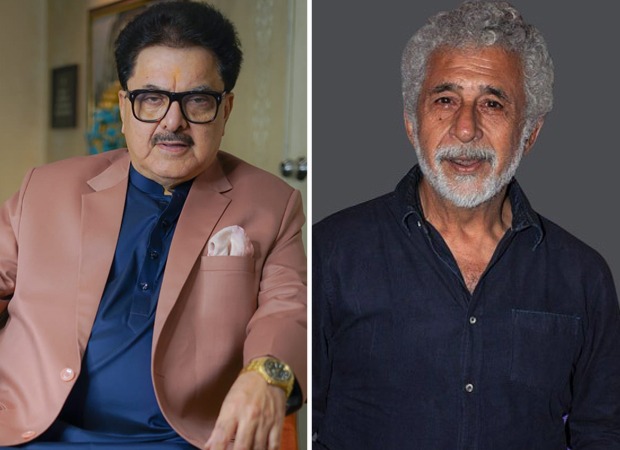
Filmmaker and producer Ashoke Pandit has criticised veteran actor Naseeruddin Shah after Shah expressed support for protesting students at Delhi’s Jamia Millia Islamia. The dispute has drawn attention to the continuing debate around student activism, political labels and the role of public figures in India’s cultural conversation.
Speaking to news agency ANI, Pandit said he was not surprised by Shah’s language and described the actor’s recent public remarks as increasingly aggressive. He also claimed that Shah’s statements reflected frustration. His comments followed a video Shah shared on Facebook in support of Jamia students seeking the restoration of their student union.

Shah’s message to Jamia students
In the video, Shah wore a badge bearing the words “Dimagi Naxal” and said he was proud to identify with the label. The phrase is often used as a political accusation against people perceived to hold radical or anti-establishment views. Shah’s use of it appeared to challenge the practice of branding protesters and critics with terms such as “anti-national” or “tukde tukde gang.”
Shah also questioned the government’s response to student protests and voiced support for those calling for the return of an elected student union at Jamia Millia Islamia. The video added to a series of public comments in which the actor has spoken about student-led campaigns and the space available for dissent.
His remarks have prompted sharply different reactions. Supporters may view the badge as a pointed act of political expression, while critics may see the language as provocative. The disagreement reflects a wider national conversation about how protest movements are described—and whether charged labels help clarify debate or deepen divisions.
Pandit alleges Shah’s conduct has changed
Responding to the video, Pandit said Shah’s recent public appearances had become increasingly confrontational. He claimed the actor had been using abusive language and suggested that his manner on camera conveyed frustration.
“I’m not shocked, nor am I surprised with Naseeruddin Shah’s abusive language,” Pandit said in comments reported by ANI. He added that he believed Shah’s behaviour had changed over the past year and said he felt sympathy for the actor.
Pandit further argued that Shah’s public statements were affecting how audiences perceived him. He said that, in his view, the actor appeared frustrated when speaking on camera and that repeated outbursts could expose him to greater criticism. These are Pandit’s personal assessments; Shah’s video itself was an expression of his support for the students and his opposition to the political labels he referenced.
Films and ideological differences enter the debate
Pandit also linked what he described as Shah’s frustration to disagreements over films that have attracted significant attention in India. He named The Kashmir Files, The Kerala Story and Dhurandhar, arguing that the popularity of such productions did not align with Shah’s apparent political outlook.
That claim introduces a familiar fault line in Bollywood and the wider Indian film industry: the relationship between cinema, ideology and public response. Films dealing with political or social subjects often become part of debates that extend beyond box-office performance. Viewers, filmmakers and commentators may disagree about a film’s perspective, its treatment of real events or the way it contributes to public discussion.
However, a film’s commercial success does not, by itself, establish that all audiences share its message—or explain why another public figure takes a particular position. Pandit’s comments are therefore best understood as his interpretation of Shah’s remarks, rather than a confirmed explanation of the actor’s motivations.
Pandit also suggested that Shah should consult a psychiatrist, claiming that the actor’s behaviour indicated a mental-health concern. That was an allegation made during the exchange, not a medical assessment. Public discussion of mental health is most responsible when it avoids treating political disagreement or forceful language as evidence of a diagnosis.
A continuing conversation about student activism
Shah’s support for Jamia students is not the only recent instance in which he has spoken about campus protests. He has also expressed support for students protesting at the Satyajit Ray Film and Television Institute. Together, these interventions place him among prominent cultural figures who have used their platforms to comment on student issues.
Such involvement can bring wider attention to campus concerns, but it can also make the speaker a target of intense scrutiny. Actors and filmmakers are often expected to remain focused on their work, yet many use interviews and social media to express views on public affairs. In an era when short video clips can quickly circulate online, a single phrase or symbol may become the centre of a much larger argument.
The latest exchange also illustrates how debates about student rights can become entangled with broader political and cultural disagreements. Questions about student representation, protest and government response are distinct from arguments about the ideological content of films, but public reactions can bring these topics together. The result is a debate that reaches beyond Jamia or the film industry and into the wider discussion about speech and dissent in India.
What happens next?
For now, the disagreement centres on Shah’s “Dimagi Naxal” message and Pandit’s criticism of the actor’s tone and motivations. Their contrasting positions have generated fresh attention across entertainment and political news coverage, while also highlighting the influence Bollywood figures can have on conversations outside cinema.
The episode is a reminder that public commentary by artists can carry several meanings at once: it may express solidarity, challenge a political label, invite criticism or intensify existing divisions. As reactions continue, the central issues remain how student protesters are represented, how public figures use their platforms and how disagreements can be discussed without turning personal claims into established fact.