Legal Storm Erupts Over Aryan Khan’s Debut Directorial Series “The Ba***ds of Bollywood”
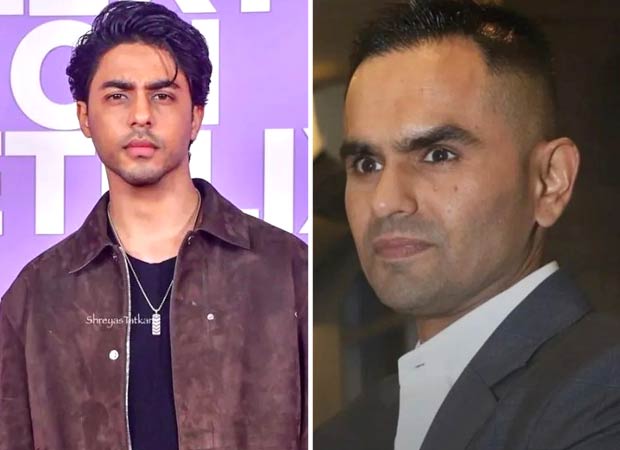
The much-anticipated debut directorial project by Aryan Khan, son of Bollywood superstar Shah Rukh Khan, has become the center of a heated legal controversy that has captivated fans, critics, and legal experts alike. Titled “The Ba***ds of Bollywood,” the series has sparked intense debate due to its portrayal of certain characters that closely resemble real-life personalities involved in high-profile Bollywood scandals. The controversy escalated when former NCB officer Sameer Wankhede, who played a pivotal role in the 2021 Aryan Khan drug case, filed a defamation suit against the series’ producers, Shah Rukh Khan’s Red Chillies Entertainment and Netflix, alleging that the show damages his reputation and portrays him in a false, biased light.
The Origins of the Dispute: A Character That Resembles Wankhede
Immediately after the series premiered on Netflix, social media users and industry insiders began pointing out a striking resemblance between a character in The Ba***ds of Bollywood and Sameer Wankhede. The character, depicted as a stern, authoritative figure involved in law enforcement, bore notable similarities to Wankhede’s physical appearance, mannerisms, and role in the narrative. Critics argued that this depiction was not merely a fictional creation but a thinly veiled caricature that could influence public perception.

Wankhede’s legal representatives contended that the scene in question was not just an artistic choice but a deliberate attempt to mock and defame him. His petition emphasizes that the portrayal has led to widespread public shaming, online trolling, and even threats directed at his family members. Such actions, Wankhede claims, have serious repercussions on his personal and professional life, raising questions about the boundaries of satire and artistic freedom in Bollywood and streaming content.
Red Chillies Entertainment and Netflix’s Defense: “It’s Satire, Not a Biography”
During the latest hearing on November 17, the legal team representing Red Chillies Entertainment and Netflix made a compelling case that the series is a work of satire, intended to entertain and critique Bollywood’s underbelly rather than serve as a factual biography of real individuals. Senior Advocate Kaul argued that characters in the series are inspired by real-life figures, but creative liberties are an inherent aspect of storytelling—an established tradition in Indian art and satire.
He drew a parallel with the legendary cartoonist R.K. Laxman, whose satirical cartoons often lampooned political leaders and societal issues without necessarily aiming for factual accuracy. “Satire has been an integral part of Indian creative culture for decades,” Kaul asserted, emphasizing that the intent behind the series was to critique systemic issues within Bollywood and society at large, not to defame specific individuals.
However, the court was skeptical about this defense, highlighting that while satire is protected, it cannot be used as a shield when the depiction appears to target specific persons with bias or malice. The judge questioned whether the portrayal crossed the line from artistic expression into defamation, especially given the character’s resemblance to Wankhede and the context of real events.
Wankhede’s Perspective: “My Reputation Is at Stake”
Representing Wankhede, lawyer J. Sai Deepak emphasized that even if the series is labeled as satire, the makers have a responsibility to clarify the inspiration behind their characters, particularly when real-life figures are involved. He argued that the scene in question does not advance the narrative substantively but instead appears designed to tarnish Wankhede’s image.
Deepak stated, “This portrayal impacts my client’s reputation and personal safety. The series has contributed to a climate of online abuse, threats, and unwarranted scrutiny.” He further pointed out that the depiction has effectively subjected Wankhede to a “public trial,” influencing public opinion and damaging his credibility. The lawyer cited a review by film critic Kamal R. Khan, which accused the show of mocking Wankhede, as evidence of the narrative’s potential to incite hostility and misinformation.
In a candid moment during the hearing, Wankhede himself addressed the court, asking, “Do I deserve this trial in public opinion?” His plea underscores the gravity of the situation for the former officer, whose reputation has been intertwined with the ongoing legal battles related to the 2021 drug case—cases that involve multiple agencies such as the CBI, ED, and CAT.
The Broader Context: Bollywood’s Portrayal in Media and The Limits of Artistic Freedom
This legal tussle highlights a larger debate within Bollywood and Indian streaming content about the boundaries of artistic expression, satire, and defamation. Bollywood has a long-standing tradition of blending entertainment with social commentary, often pushing the envelope to address sensitive issues. However, as the industry increasingly intersects with social media and real-life personalities, questions about responsible storytelling and respect for individuals’ reputations have gained prominence.
The controversy surrounding The Ba***ds of Bollywood also reflects the evolving landscape of streaming platforms like Netflix, which have revolutionized how stories about Bollywood and its stars are told. While these platforms afford creators greater freedom, they also invite scrutiny from legal and ethical standpoints, especially when real people are depicted in fictionalized settings.
Legal experts observe that the case could set a precedent for how satire and fictionalization are treated in Indian courts, particularly in relation to public figures and law enforcement officials involved in high-profile cases. Balancing creative freedom with individual rights remains a delicate act for filmmakers and content creators in Bollywood’s vibrant ecosystem.
What’s Next? Awaiting the Court’s Final Decision
As of now, the Delhi High Court has not issued a final verdict in the case. The court has ordered further hearings to examine the nuances of the portrayal, the intent behind the scenes, and the impact on Wankhede’s reputation. The judgment is expected to clarify the extent to which creative works can depict real individuals without infringing on their rights or crossing into defamation.
Both sides remain firm—Wankhede’s legal team insists that the portrayal damages his personal and professional integrity, while the filmmakers maintain that their creative expression is protected under the principles of satire and artistic liberty. The outcome of this case could have significant implications for Bollywood’s portrayal of real-life figures, especially in the burgeoning era of digital streaming and social media discourse.
Additional Context: The Role of Bollywood in Shaping Public Discourse
Bollywood, as India’s largest entertainment industry, has historically played a vital role in shaping societal narratives and influencing public opinion. Movies, series, and celebrity culture often reflect and critique societal norms, corruption, political issues, and personal scandals. However, the line between criticism and defamation can sometimes blur, leading to legal challenges like the one currently unfolding.
This case underscores the importance of responsible storytelling, especially when dealing with sensitive topics and real individuals. It also raises awareness about the need for clear guidelines on satire, parody, and depiction of public figures within Indian entertainment law.
Conclusion: A Pivotal Moment for Bollywood and Streaming Content
The legal battle over The Ba***ds of Bollywood exemplifies the evolving dynamics of Bollywood’s portrayal of its own industry and the complex relationship between creative freedom and individual rights. As the case progresses, it will likely influence future content creation, prompting filmmakers and streaming giants to tread carefully when fictionalizing real-life personalities.
For fans and critics of Bollywood alike, this controversy serves as a reminder that entertainment is a reflection of societal tensions and cultural debates. The resolution of this case will not only impact Aryan Khan’s debut project but could also shape the legal landscape governing artistic expression in Bollywood’s digital age.
Stay tuned for further updates as the Delhi High Court prepares to deliver its verdict, a decision that could redefine the boundaries of satire and defamation in Bollywood’s vibrant storytelling universe.