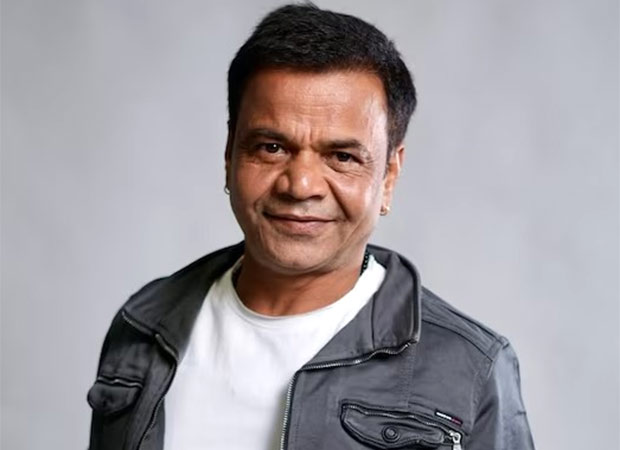
Delhi High Court Refuses to Vacate Interim Suspension of Bollywood Actor Rajpal Yadav’s Sentence in Cheque Bounce Case
The legal saga surrounding renowned Bollywood actor Rajpal Yadav took a significant turn on Wednesday when the Delhi High Court declined to lift its previous interim order that had suspended his sentence in a cheque bounce case. This development underscores the ongoing complexity of legal proceedings involving celebrities and highlights the judiciary’s cautious approach in such high-profile matters.
Background of the Case: From Conviction to Suspension
The case dates back to May 2024, when a sessions court convicted Bollywood actor Rajpal Yadav and sentenced him to six months in jail over a cheque bounce dispute. The case drew notable attention, given Yadav’s popularity and his reputation as one of Bollywood’s versatile comedians. Following his conviction, the Delhi High Court granted an interim relief on February 16, suspending his sentence and allowing him to walk free after he had been in custody since February 5.

This suspension was granted on the basis of assurances from Yadav’s legal team that he intended to settle the outstanding dues with the involved production company. The court’s decision was viewed as a temporary reprieve, providing the actor an opportunity to resolve his financial liabilities without serving jail time immediately.
Recent Developments: Court’s Stand on the Suspension
On Wednesday, during the hearing, Justice Swarana Kanta Sharma emphasized that there was no compelling reason to send Yadav back to jail at this juncture. The court’s decision was rooted in the principle of fairness and the need for substantive proof of non-compliance before taking such a drastic step. The judge stated, “I do not find any reason. He is not running away. He is still here. He is not going anywhere.”
The complainant, representing the production company, had filed an application seeking the cancellation of the relief granted to Yadav, arguing that the actor had failed to adhere to the repayment commitments. The court, however, refrained from passing any immediate orders on this application, opting instead to examine the matter further during the next hearing scheduled for April 1.
The Actor’s Presence and Courtroom Dynamics
Rajpal Yadav appeared in person before the court and made brief submissions, demonstrating his willingness to cooperate. During the proceedings, the complainant’s lawyer alleged that Yadav was attempting to turn the case into a media spectacle. The lawyer stated, “Either he should argue, or his counsel,” implying that the actor’s public image was being used to influence perceptions of the case.
In response, Justice Sharma addressed concerns about media trials, noting, “Media trial ka kya hai wo to har ek cheez ka hota rehta hai. Mujhe koi fark nahi padta. Main media dekhti hi nahi hu…Media me kya hota hai meri kaan, aankhein sab band hoti hai. Mere liye he is an ordinary litigant, you are an ordinary litigant.” Her remarks underscored that, in her view, Yadav’s celebrity status should not influence the judicial process, and that all litigants are treated equally under the law.
Clarifications on Legal and Financial Proceedings
The court clarified that Yadav’s celebrity status did not grant him special privileges, emphasizing that he was being heard as an ordinary litigant. Justice Sharma further remarked, “Just because he is an actor, main inko nahi sun rahi hu. Main to koi bhi litigant aate hain unko bhi sunti hu. Aap inko importance de rahe ho. Aur ek baat aur hai ki us litigant ne nahi bola ki main so and so hu.”
The court also highlighted the importance of concrete proposals for settlement. It stated that if Yadav intends to resolve the dispute amicably, he should submit a clear and feasible repayment plan. The court’s next hearing on April 1 is expected to focus on whether the actor has made any progress in settling the dues and whether the suspension of his sentence can be maintained or revoked.
Unfulfilled Payment Commitments and Legal Consequences
The legal dispute centers around Yadav’s failure to pay approximately Rs 2.5 crore owed to the production company. Initially, Yadav had sought permission to clear the dues in two installments: Rs 40 lakhs by December 16, 2025, and the remaining Rs 2.1 crores by January 15, 2026. However, these payments were not made as promised, raising concerns about his commitment to settle the debt.
Earlier, Yadav claimed that a delay was caused by an inadvertent error in the demand draft, but the court was unsympathetic to this explanation, noting that no corrective steps had been taken. Following this, the court directed him to surrender within two days, and when his plea for additional time was rejected, he surrendered on February 5, 2024.
Implications for Bollywood and Celebrity Legal Battles
This case has garnered significant attention within Bollywood circles, highlighting the challenges celebrities face when entangled in legal disputes. Often, the public perceives celebrity cases differently, with some arguing that high-profile individuals receive preferential treatment. However, the Delhi High Court’s approach in this instance underscores the judiciary’s commitment to impartiality and fairness, regardless of celebrity status.
Such legal proceedings also shed light on the importance of accountability in the entertainment industry. Bollywood, often celebrated for its glitz and glamour, is not immune to legal and financial disputes. The Rajpal Yadav case serves as a reminder that legal obligations, especially financial dues, must be honored, regardless of fame or popularity.
Broader Context: Bollywood’s Legal Troubles and Public Perception
Over the years, Bollywood has seen several high-profile legal cases involving actors, producers, and other industry insiders. These cases often attract media frenzy, influencing public perception of the industry’s integrity. While some argue that celebrities should be held to higher standards due to their influence, others believe that the judiciary’s role is to ensure equal treatment under the law.
The ongoing case involving Rajpal Yadav also highlights the importance of transparency and accountability in Bollywood’s financial dealings. As the industry continues to grow globally, maintaining legal and ethical standards is crucial to sustaining its reputation and trustworthiness.
Looking Ahead: What the Future Holds for Rajpal Yadav
The next court hearing on April 1 is highly anticipated, as it will determine whether Yadav will continue to enjoy the benefits of his interim relief or be required to serve his sentence. If Yadav plans to settle the dispute fully, he must present a concrete proposal detailing how he intends to clear the outstanding amount. This could potentially lead to a resolution that allows him to return to his acting career without the shadow of legal proceedings.
For Bollywood fans and industry insiders alike, the case exemplifies the ongoing legal challenges faced by actors and the importance of adhering to contractual and financial obligations. It also underscores the need for transparency and integrity in the entertainment industry, fostering a healthier environment for all stakeholders.
Conclusion
The Delhi High Court’s decision to keep in place its interim suspension of Rajpal Yadav’s sentence marks a significant moment in his legal journey. While the actor remains free pending further proceedings, the case continues to serve as a reminder of the importance of accountability in Bollywood. As the industry evolves, balancing fame with legal and ethical responsibilities remains paramount, ensuring that justice is served impartially and transparently.
Stay tuned for updates on this high-profile case and its implications for Bollywood’s legal landscape. The upcoming hearing in April will be crucial in determining Yadav’s future, both legally and professionally. The case also highlights broader themes of celebrity accountability, industry ethics, and the role of the judiciary in maintaining fairness in the world of entertainment.