Why Aamir Khan Earned a Special Thanks in Avinash Arun’s Prahaar
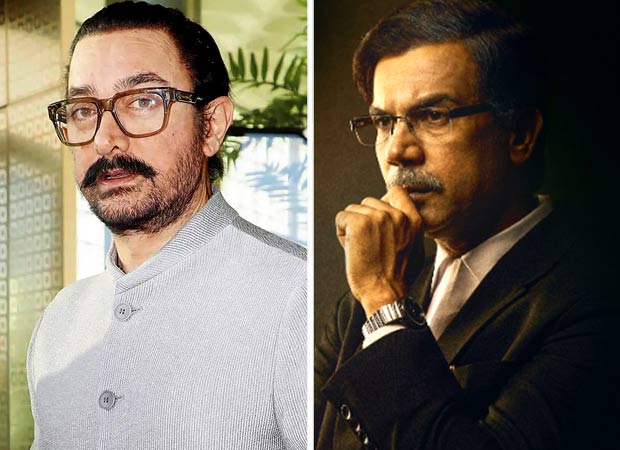
Avinash Arun’s Prahaar has drawn attention for its emotionally charged storytelling, powerful performances and confident direction. But viewers who stayed through the closing credits noticed another detail: Aamir Khan’s name appeared in the film’s “Special Thanks” section. The acknowledgement was more than a courtesy. Arun has revealed that Khan helped bring him on board the project by recommending him to producer Dinesh Vijan.
In an exclusive conversation with Bollywood Hungama, the filmmaker explained that Khan believed he was well suited to the subject and encouraged him to consider directing the film. That vote of confidence, Arun said, played an important role in his decision to take on Prahaar.

Aamir Khan’s recommendation helped set the project in motion
Arun said he included Khan in the credits because the actor was instrumental in connecting him with the film. Khan suggested Arun’s name to Vijan and personally urged the filmmaker to explore the project. As Arun recalled, Khan told him that he felt Arun could do justice to the subject and should give it serious consideration.
For a director, such encouragement can matter considerably—particularly when a project calls for a careful balance of drama, emotion and visual storytelling. Khan’s recommendation gave Arun an opportunity to assess the material, while the confidence behind it helped motivate him to say yes. The “Special Thanks” credit therefore points to a meaningful contribution behind the scenes, rather than a cameo or on-screen appearance.
Prahaar has been praised by viewers for its dramatic and emotional moments, as well as the performances and Arun’s direction. His work as both director and cinematographer gives the film a unified visual approach, allowing the camera work to support the mood and rhythm of the narrative. That combination of craft and storytelling has become a defining feature of Arun’s filmmaking career.
A long-standing connection between Aamir Khan and Avinash Arun
Arun’s gratitude also reflects a relationship built over several years. He said Khan had followed his work since his directorial debut, the Marathi film Killa, released in 2015. The actor continued to keep track of Arun’s projects and contacted him again after the filmmaker’s work on the acclaimed series Paatal Lok.
That sustained interest is notable in an industry where creative relationships often develop through repeated collaborations and recommendations. Khan’s support suggests he has been watching Arun’s progress not only as a director, but also as a filmmaker with a strong command of visual storytelling. For Arun, the encouragement of an established actor and producer carries particular weight because it recognizes a body of work that spans independent cinema, streaming projects and mainstream films.
Could Aamir Khan and Avinash Arun work together?
Asked whether the two might collaborate on a future project, Arun said they are discussing a couple of possibilities and expressed hope that they will work together soon. He did not share further details, so no formal film announcement has been made. Still, the possibility is likely to interest fans of both filmmakers, especially given their shared appreciation for story-driven cinema.
Khan has long been associated with projects that place strong emphasis on narrative, character and emotional impact. Arun, meanwhile, has moved fluidly between feature films and streaming series, bringing a distinctive visual sensibility to each. A collaboration could offer an intriguing meeting of perspectives, although the nature, format and timeline of any potential project remain unknown.
Avinash Arun’s journey from cinematographer to director
Arun is widely respected as both a cinematographer and a director. A graduate of the Film and Television Institute of India in Pune, he built his reputation behind the camera before establishing himself as a filmmaker. His cinematography credits include notable titles such as Masaan (2015), Drishyam (2015), Madaari (2016), Hichki (2018) and Karwaan (2018).
His experience as a cinematographer has shaped the way he approaches directing. Rather than treating visuals as decoration, Arun often uses composition, light and movement to deepen a scene’s emotional meaning. This background has also allowed him to take on both directing and cinematography responsibilities on several projects, including Prahaar.
Arun made his directorial debut with Killa, a Marathi-language coming-of-age film that earned critical appreciation for its sensitive portrayal of childhood and change. He later directed Three of Us (2023), a reflective drama, and worked on a range of streaming titles, including School of Lies, Paatal Lok and Pritam and Pedro.
On the first season of Paatal Lok, Arun directed while cinematographer Saurabh Goswami shared the director-of-photography responsibilities. The collaboration highlights how Arun’s projects can bring together different visual talents, even as his own cinematographic instincts remain central to his approach.
Why the credit matters to Prahaar’s story
In film credits, a brief acknowledgement can reveal the network of trust and creative advocacy that helps a project take shape. Khan’s recommendation connected Arun with Vijan and encouraged him to consider a story that he ultimately chose to direct. The detail offers audiences a glimpse into the decision-making that happens before cameras begin rolling.
For Bollywood followers, the revelation also adds an interesting layer to Prahaar’s release. The film’s reception has focused on its performances, emotional intensity and direction, while the story behind Khan’s special mention shows how influential a personal endorsement can be. With Arun and Khan now discussing possible projects, the acknowledgement may prove to be an early sign of a creative partnership still to come.
For now, viewers can appreciate Prahaar as a film shaped by Arun’s dual expertise and supported by Khan’s confidence in his vision. Whether their conversations lead to a future collaboration remains to be seen, but Arun’s comments have already made the “Special Thanks” credit one of the film’s most talked-about behind-the-scenes details.