
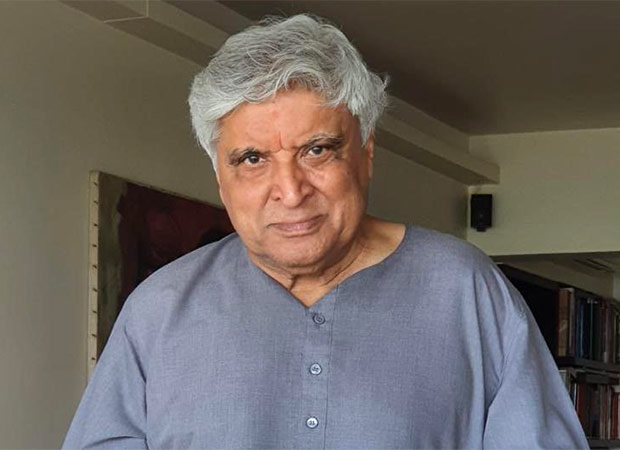
Javed Akhtar Condemns Taliban’s Controversial Laws Endorsing Domestic Violence: A Call for Humanity and Moral Responsibility
In a stirring display of moral clarity and unwavering commitment to human rights, renowned Bollywood lyricist and screenwriter Javed Akhtar has publicly denounced the recent laws enacted by the Taliban in Afghanistan, which have shockingly legalized domestic violence under the guise of religious sanction. His outspoken stance underscores the importance of human values and the need for the global community, especially influential voices from India’s entertainment industry, to stand against such barbaric decrees.
The Taliban’s Controversial Legislation: A Step Backward for Humanity
The Taliban, a group notorious for its strict interpretation of Islamic law and its oppressive policies, has introduced a new set of laws that many perceive as a blatant endorsement of violence against women. According to reports, these laws explicitly permit wife-beating, provided no bones are broken—effectively decriminalizing a form of domestic abuse. This blatant approval of violence has sparked outrage across the international community, with human rights organizations labeling it as a gross violation of basic human dignity and women’s rights.

Many experts and activists argue that such legislation not only undermines the progress made in gender equality but also perpetuates a cycle of violence and oppression rooted in outdated patriarchal norms. The international reaction has been swift, with numerous countries and advocacy groups calling for the Taliban to revoke these laws and uphold the fundamental rights of women and girls.
Javed Akhtar’s Voice: A Moral Stand Against Violence in All Forms
Amidst the global outcry, Javed Akhtar, one of India’s most respected and liberal thinkers, issued a forceful statement condemning the Taliban’s move. Known for his fearless advocacy of social justice, Akhtar expressed profound disappointment and outrage at the endorsement of violence under the pretext of religion.
“The impunity with which this so-called law legalizes violence is shocking to us, not to them,” Akhtar declared, emphasizing that such laws reflect a disturbing disregard for basic human decency. He appealed directly to religious leaders in India, including muftis and mullahs, urging them to condemn the legislation unequivocally. “It is all being done in the name of their religion. Whatever the reason for this barbaric decree, let us not give any credence to it,” he added.
His stance underscores a crucial point: that human values—respect, dignity, and compassion—must transcend religious and cultural boundaries. Akhtar firmly believes that violence, in any form, is incompatible with the core principles of humanity, and that endorsing or condoning such acts is a betrayal of societal ethics.
Bollywood’s Responsibility: Promoting Values of Respect and Dignity
Javed Akhtar also took this occasion to reflect on the role of cinema, particularly Bollywood, in shaping societal attitudes towards violence and gender equality. Known for his principled approach to storytelling, he argued that Bollywood has a moral obligation to portray women with respect and dignity.
“Cinema is a powerful medium that influences millions,” he explained. “We (Salim Khan and I) have always avoided glorifying or condoning violence, especially violence against women. Our films—whether blockbuster hits like Sholay or less successful ventures like Imaan Dharam—have consistently depicted women characters with respect, dignity, and agency.”
He further emphasized that responsible filmmaking can serve as a catalyst for societal change, promoting values that uphold human rights and equality. In a country like India, where Bollywood reaches millions daily, movies can be a powerful tool to challenge stereotypes, inspire empathy, and foster a culture of respect for all genders.
The Broader Context: Violence, Religion, and Society
Akhtar’s comments come at a time when discussions around religion, morality, and societal progress are more relevant than ever. The intersection of cinema, culture, and social values plays a pivotal role in shaping public consciousness. By condemning violence in cinema and society alike, Akhtar advocates for a future where respect and human dignity are non-negotiable.
His call for Indian religious leaders to condemn the Taliban’s laws underscores the importance of moral leadership rooted in compassion and human rights. As a nation proud of its diverse and pluralistic society, India’s Bollywood community often sets the tone for progressive dialogue, inspiring millions to uphold the ideals of equality and justice.
Looking Ahead: A Call for Global Solidarity and Moral Courage
The controversy surrounding the Taliban’s laws highlights the ongoing challenges faced by societies striving for gender equality and human rights worldwide. Akhtar’s outspoken stance serves as a reminder that moral courage and vocal opposition are essential in confronting oppression and violence, no matter where they occur.
As the world watches these developments unfold, it is crucial for influential voices—be it in politics, entertainment, or civil society—to stand united in denouncing violations of human rights. Bollywood, with its global reach and cultural influence, has the potential to champion these values, spreading messages of respect, dignity, and peace across borders.
Conclusion: Upholding Humanity Beyond Borders
Javed Akhtar’s passionate condemnation of the Taliban’s laws is more than just a plea; it is a clarion call for humanity. In a world increasingly interconnected through media and culture, the fight against violence and oppression must be led by individuals and communities committed to justice and decency.
As Bollywood continues to grow as a global cultural force, embracing responsibility and setting positive examples becomes vital. Films, songs, and stories can serve as powerful platforms to promote understanding, challenge stereotypes, and inspire change. Ultimately, standing against violence—whether in cinema, society, or politics—is a collective duty that transcends borders and beliefs, uniting us all in our shared humanity.
Let this be a reminder that moral integrity and compassion must guide us in building a more just, respectful, and peaceful world—one where every individual’s dignity is upheld, regardless of gender, religion, or nationality.