
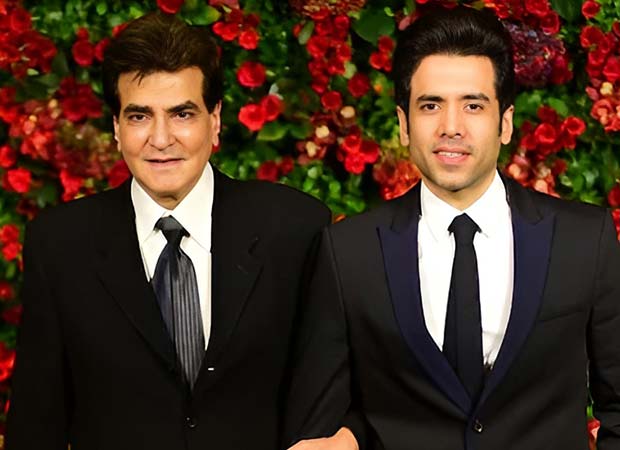
Jeetendra Kapoor and Tusshar Kapoor Make Major Real Estate Move in Mumbai’s Booming Bollywood and Digital Markets
In a significant development that underscores the increasing convergence between Bollywood’s illustrious families and India’s rapidly expanding digital economy, veteran Bollywood actor Jeetendra Kapoor along with his son Tusshar Kapoor have executed a landmark real estate transaction in Mumbai. The sale of a prominent commercial property to a Japanese telecommunications giant signifies not only the Kapoors’ active involvement in real estate but also highlights the escalating interest of global technology firms in India’s burgeoning digital infrastructure sector.
Historic Sale of Balaji IT Park: A Strategic Asset in Mumbai’s Commercial Landscape
According to newly registered property documents, the Kapoor family sold a substantial commercial asset located in Mumbai’s suburban Chandivali area, specifically within the renowned Balaji IT Park. The transaction, finalized on January 9, 2026, involved the transfer of a sprawling complex including a ground-plus-10-storey building designated as DC-10, along with an adjacent four-storey diesel generator facility. The total sale value is an impressive Rs 559.24 crores, reflecting the strategic importance and high valuation of this prime property.

The property encompasses approximately 30,195 square metres (roughly 3,25,000 square feet) of commercial space, situated in one of Mumbai’s emerging micro-markets — an area that is increasingly attracting tech giants and multinational corporations seeking modern infrastructure and connectivity. The building primarily functions as a data centre, a critical node in India’s digital ecosystem, supporting cloud computing, data storage, and connectivity solutions vital for India’s digital transformation journey.
Who Is the Buyer? NTT Global Data Centres’ Expanding Footprint in India
The buyer, NTT Global Data Centres, is a unit of the renowned Tokyo-based NTT Group, which is among the world’s leading providers of data centre, cloud, and ICT infrastructure services. This acquisition marks a significant chapter in NTT’s strategic expansion within India, a nation witnessing exponential growth in digital infrastructure demand driven by government initiatives, rising internet penetration, and the proliferation of cloud-based services.
As India accelerates its digital economy, companies like NTT are investing heavily in data centres and related facilities to meet the needs of Indian enterprises and global clients operating in India. The purchase of the Balaji IT Park property aligns with NTT’s broader vision to establish a robust presence across India’s key tech corridors, supporting burgeoning sectors such as fintech, e-commerce, and cross-border data exchange.
Market Insights: The Rising Value of Mumbai’s Commercial Real Estate
The transaction, documented by real estate consultancy Square Yards, reveals that the sale involved a significant parcel of commercial real estate, highlighting Mumbai’s status as a preferred hub for digital infrastructure investment. Notably, the transaction did not attract traditional stamp duty charges due to a 2024 government resolution, which introduced a unique metro cess of Rs 5.59 lakhs, simplifying the process for high-value deals in Mumbai’s commercial zones.
This move is indicative of the evolving regulatory landscape aimed at promoting large-scale investments in urban infrastructure and real estate, particularly in high-growth sectors such as technology and data management. The property’s strategic location and size make it a highly coveted asset among corporate giants seeking to establish or expand their digital footprint in India’s financial capital.
Family’s History of Strategic Property Deals in Mumbai
The Kapoor family’s involvement in Mumbai’s real estate market is not new. In May 2025, their firms—Pantheon Buildcon Pvt. Ltd. and Tusshar Infra Developers Pvt. Ltd.—sold another sizable property within Balaji IT Park in Andheri for Rs 855 crores. This deal was among the most significant land transactions in Mumbai that year, underlining the Kapoor family’s keen interest in leveraging their assets to tap into India’s digital infrastructure boom.
Such high-profile transactions demonstrate how Bollywood families, traditionally known for their contributions to film and entertainment, are increasingly diversifying into strategic investments in real estate and digital infrastructure. This trend reflects a broader shift where entertainment icons leverage their brand equity to participate actively in India’s economic growth sectors.
The Broader Context: Bollywood and India’s Digital Economy
Bollywood, the world’s largest film industry, has historically been a significant cultural export for India. However, in recent years, Bollywood families and celebrities have increasingly become investors, entrepreneurs, and stakeholders in the country’s real estate, technology, and infrastructure sectors. The Kapoor family’s recent real estate transactions exemplify this trend, as they align their legacy in Bollywood with strategic investments that promise long-term value.
India’s digital economy is among the fastest-growing in the world, with the government’s push for digital payments, smart cities, and cloud infrastructure creating vast opportunities. The purchase of Balaji IT Park by NTT Global Data Centres not only signifies confidence in India’s growth story but also highlights Mumbai’s critical role as a hub for digital infrastructure development in the country.
Future Outlook: The Intersection of Bollywood, Real Estate, and Digital Growth
As India continues its trajectory toward becoming a global digital powerhouse, the synergy between Bollywood’s influential families and the tech industry is likely to deepen. Celebrities like Jeetendra and Tusshar Kapoor, through their strategic real estate investments, are positioning themselves at the nexus of culture, commerce, and technology. This convergence not only enhances their personal portfolios but also underscores Mumbai’s evolving skyline as a center for innovation and digital enterprise.
Moreover, with ongoing infrastructural reforms, favorable regulatory policies, and rising foreign direct investment, India’s digital infrastructure sector is poised for sustained growth. The involvement of global players like NTT Group signifies international confidence in India’s potential, further boosting Mumbai’s status as a global hub for data centres and cloud services.
Conclusion
The recent sale of a prime commercial property in Mumbai by Bollywood veteran Jeetendra Kapoor and his son Tusshar Kapoor marks a noteworthy milestone in the intersection of entertainment, real estate, and digital infrastructure. This high-value deal exemplifies the ongoing confidence of global investors in India’s digital economy and highlights Mumbai’s emergence as a key global data centre hub. As Bollywood continues to evolve beyond entertainment into strategic economic sectors, these developments reinforce India’s position on the world stage as a thriving center for technology, innovation, and investment.
With more such investments on the horizon, the partnership between Bollywood’s influential families and India’s booming digital infrastructure sector promises an exciting future—one where culture, commerce, and technology seamlessly intertwine to shape the next chapter of India’s growth story.