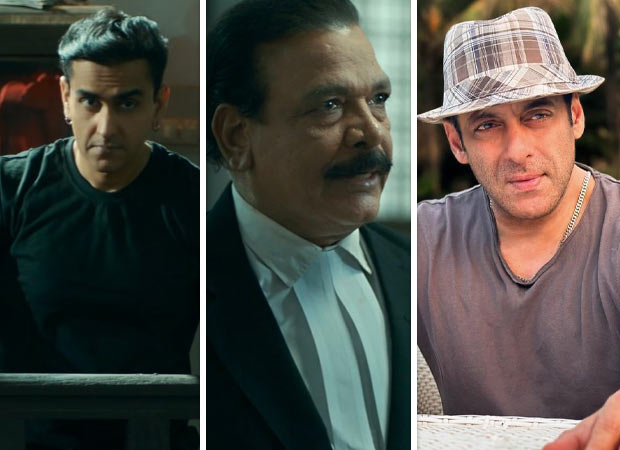
Veteran Bollywood Actor Govind Namdev Denounces Controversial Film ‘Kala Hiran: The Battle for Legacy’
In a surprising turn of events within the Bollywood industry, seasoned actor Govind Namdev has publicly distanced himself from the contentious film Kala Hiran: The Battle for Legacy. The veteran actor expressed his dismay over the misleading portrayal and the project’s controversial narrative, clarifying that he was kept in the dark about its true premise and would have never consented to be part of it had he known the full story. This revelation has reignited debates surrounding ethical practices in Bollywood filmmaking, especially concerning films that touch upon sensitive legal and social issues.
Misleading Information and Unexpected Revelations
Initial Assumptions and Deception
Govind Namdev, who has been a prominent figure in Bollywood for decades, shared his experience in an exclusive interview with Amar Ujala, revealing that he initially signed up for a project titled Sambhal. According to him, he was under the impression that he was working on a straightforward courtroom drama focusing on legal proceedings, specifically related to Salman Khan’s infamous blackbuck case. It was only later that he learned about a different project titled Kala Hiran, which was being made concurrently, with content that diverged sharply from his understanding.

“I was told that my role would involve a courtroom scene based solely on documented legal procedures,” Namdev explained. “The filmmakers assured me that the film would not involve any dramatized or fictionalized content beyond what was on record. I believed I was participating in a film that presented a factual recount of legal proceedings, which is a common practice in Bollywood for creating impactful courtroom dramas.”
The Moment of Realization
The veteran actor recounted his shock upon viewing the teaser for Kala Hiran. “As soon as I watched the trailer, I was shaken to the core,” he admitted. “It became painfully clear that the project was completely different from what I had agreed to. A character resembling Salman Khan was created and portrayed in a manner that was both fictionalized and misrepresentative. I felt deceived and used, as the film seemed to go beyond the scope of what I was told.”
Namdev emphasized that he was never informed about the extent of the creative liberties taken or the narrative elements involving Salman Khan’s persona. “There is a vast difference between the legal reality and how it has been depicted in the film. I was led to believe I would be part of a documentary-style portrayal, but what has been released feels like a distorted version meant to sensationalize,” he added.
Clarification on Role and Ethical Standpoint
Limited Involvement and Honest Intentions
The 71-year-old actor further clarified that his involvement was always intended to be minimal and strictly confined to a courtroom scene. “The filmmakers assured me that my role was limited to a single courtroom sequence based on actual legal proceedings,” he said. “They told me that nothing fictional or dramatized would be added beyond what is on record. Based on this, I agreed to participate, believing that it was a responsible way to depict real events without sensationalism.”
He also expressed concern over the ethical implications, stating that he would have refused to be part of any project that misrepresented or tarnished the image of Salman Khan, a Bollywood superstar with a massive fan following. “I share a cordial relationship with Salman Khan and have the utmost respect for him. I would never knowingly participate in a film aimed at damaging his reputation or spreading misinformation.”
Distance from Community and Controversial References
Additionally, Namdev clarified that he does not identify with any criminal elements or gang references associated with the Bishnoi community, which has been linked to the legal case in the film. “I cannot consider any Bishnoi gang as my ideal or associate with such narratives. My involvement was solely in the context of a legal courtroom scene, and I had no knowledge or intent to endorse any controversial or criminal groups,” he emphasized.
Bollywood’s Ongoing Legal and Ethical Dilemmas
The Film’s Controversial Content and Public Backlash
Kala Hiran has become a lightning rod for controversy within Bollywood and beyond, primarily because of its striking resemblance to real-life events involving Salman Khan and the 1998 blackbuck poaching case. The teaser’s portrayal of a character named Ayaan Khan, played by Kashif Iqbal Khan, has drawn sharp criticism for its visual similarities, mannerisms, and overall appearance to the Bollywood star. Critics and fans alike have questioned whether the film is a responsible artistic endeavor or an exploitative attempt at sensationalism.
Legal Action and Court Intervention
The controversy escalated further when Salman Khan and his legal team took decisive action, approaching the Delhi High Court to seek an immediate and permanent stay on the film’s production, promotion, and release. Their plea centers around protecting the actor’s personality rights and reputation, asserting that the film’s portrayal violates his privacy and could mislead the audience by presenting a distorted version of real events.
The court has responded by issuing notices to the filmmakers, demanding their response and clarifications. This legal intervention underscores the complex intersection of free artistic expression, legal rights, and the responsibility of filmmakers in Bollywood to ensure ethical storytelling, especially when real individuals and sensitive legal cases are involved.
Implications for Bollywood and Future Filmmaking
Ethical Considerations in Depicting Real-Life Legal Cases
The ongoing controversy surrounding Kala Hiran highlights a broader challenge within Bollywood: balancing creative freedom with social responsibility. Films based on true events carry the weight of public perception and legal scrutiny. As Bollywood continues to produce films inspired by real-life stories, filmmakers are increasingly compelled to tread carefully, ensuring accuracy and respecting the rights of individuals involved.
The Role of Actors and Ethical Responsibility
Govind Namdev’s candid admission and distancing from the project serve as a cautionary tale for actors and filmmakers alike. It underscores the importance of transparency, informed consent, and ethical storytelling practices in Bollywood. As the industry evolves, there is a growing demand for accountability, especially when films touch upon legal proceedings, community issues, or personal reputations.
Conclusion: A Call for Responsible Bollywood Filmmaking
The case of Kala Hiran exemplifies the intricate dynamics of Bollywood’s creative landscape—where artistic expression often intersects with legal, ethical, and social considerations. Govind Namdev’s stance not only brings to light the potential pitfalls of misrepresentation but also emphasizes the need for responsible filmmaking that respects truth and individual rights. As Bollywood continues to captivate audiences worldwide, the industry must prioritize integrity, transparency, and respect for all stakeholders involved.
Final Thoughts
While Bollywood remains a vibrant hub of storytelling and cultural expression, incidents like these serve as a reminder of the importance of ethical standards in filmmaking. The ongoing legal battle and the actor’s revelations could well influence future productions, encouraging filmmakers to adopt more transparent and responsible practices. Ultimately, the goal should be to produce compelling stories that entertain without compromising truth or integrity.