Bollywood’s New Era: How ‘Dhurandhar 2’ Is Reshaping Audience Expectations and the Length Paradigm
When we hear about a Bollywood film running for nearly four hours, the immediate reaction is often one of skepticism. Traditionally, Indian cinema has adhered to a runtime that hovers around two and a half hours, making anything longer seem like an endurance test for viewers. The typical Bollywood movie, with its songs, elaborate dance sequences, and dramatic arcs, is designed for a relatively brisk experience. But the recent success of ‘Dhurandhar 2’ challenges this longstanding norm, signaling a seismic shift in how Indian audiences consume cinema and what they now expect from blockbuster entertainment.
The Unprecedented Length of ‘Dhurandhar 2’ — A Sign of Changing Cinema Rules
At first glance, a 3-hour 49-minute runtime appears excessive, especially for a Bollywood film. This isn’t a quick evening escape; it’s a serious commitment. Moviegoers are investing their time, patience, and attention span in a film that essentially combines the length of two standard Bollywood movies into one sprawling saga. Historically, such a length would have been considered a risk, with trade analysts raising concerns about fewer showings per day, lower ticket sales, and audience fatigue. Yet, ‘Dhurandhar 2’ not only defies these predictions but also enjoys a thriving audience that willingly sits through every minute.

This phenomenon reveals an important evolution: the old rulebook for film length in Bollywood is rapidly becoming obsolete. Audiences are demonstrating a newfound appetite for longer, more layered narratives that demand their attention and reward their patience. The question now is: why?
Breaking the Old Rules: The Rise of Episodic Cinema
What makes ‘Dhurandhar 2’ particularly intriguing is its structure. Unlike traditional Bollywood films, which often follow a linear, hour-long format, this film is crafted more like a series of interconnected episodes. Each segment functions as a mini-climax, complete with twists, tonal shifts, and revelations. This episodic approach transforms the viewing experience into a series of mini-engagements, keeping audiences hooked without the feeling of fatigue or monotony.
Aditya Dhar, the visionary director behind the film, reportedly shot nearly seven hours of footage across India and Thailand. Instead of trimming the material into a single, conventional film, he chose to split it into two parts, trusting the narrative’s inherent strength. This decision reflects a broader shift in Bollywood storytelling—moving away from the constraints of traditional runtime and embracing a format that mirrors modern binge-watching habits.
How ‘Dhurandhar 2’ Redefines Audience Engagement
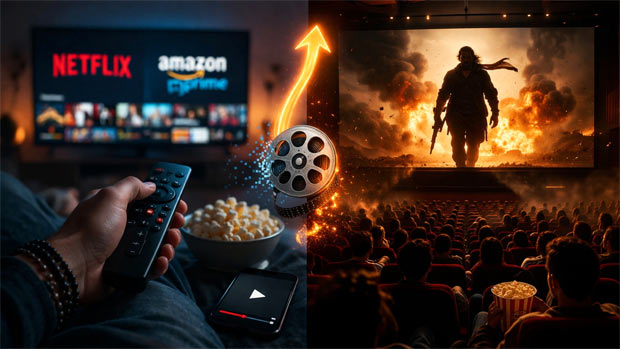
By structuring the film in chapters, Dhar taps into a psychological rhythm similar to binge-watching a gripping series. Audiences are no longer passive viewers; instead, they actively engage with each episode, eager to see what unfolds next. This chapter-based storytelling aligns perfectly with the consumption patterns cultivated by streaming giants like Netflix and Amazon Prime, which have trained viewers to tolerate longer narratives presented in episodic formats.
In fact, the success of ‘Dhurandhar 2’ suggests that OTT platforms have not destroyed the theatrical experience but have reprogrammed audience patience and attention spans. Viewers are now accustomed to consuming stories in smaller, chapter-like segments—six, eight, or ten episodes—without the traditional interval. This shift means that long-form storytelling no longer intimidates audiences; instead, they embrace it when executed well.
The New Audience: Patience, Not Shortened Attention
The narrative that OTT has eroded attention spans is a myth. Instead, streaming services have cultivated a new type of viewer—one with a different stamina for layered stories and delayed gratification. The Indian audience of 2026, therefore, is not the same as that of 2010. They are more sophisticated, more patient, and more receptive to longer, nuanced cinema that rewards attention with depth and richness.
In this context, the runtime of ‘Dhurandhar 2’ becomes less of a problem and more of an opportunity. The film’s pacing is crucial—drag and stagnation are the true enemies, not length. Dhar understands this implicitly, crafting a narrative that maintains momentum and escalates tension throughout its extended duration. As a result, viewers are not merely watching a lengthy film—they are experiencing a continuous, immersive journey that feels as engaging as a well-crafted series.
The Key: Smarter, Not Longer
This evolution isn’t about every filmmaker making 4-hour epics. Instead, it’s about understanding that audiences are willing to invest in longer stories if they are compelling, well-paced, and layered with multiple payoffs. The concept of “delayed gratification” becomes central to modern Bollywood storytelling, where complex arcs unfold over extended periods, keeping viewers hooked without feeling fatigued.
It’s important to differentiate between indulgence and substance. A poorly written 100-minute film can drag endlessly, while a thoughtfully crafted 220-minute epic can be exhilarating. ‘Dhurandhar 2’ exemplifies this: its length is justified by its engrossing narrative, layered characters, and episodic rhythm that mirrors the best of streaming content.
Implications for Bollywood and the Future of Indian Cinema
The success of ‘Dhurandhar 2’ sends a clear message to Bollywood filmmakers: the old age of “shorter is safer” is over. Audiences have evolved, and their expectations have shifted. They crave stories that are immersive and layered, and they are more than willing to sit through longer films if the storytelling is engaging.
This shift could herald a new era in Bollywood, where longer, more ambitious projects become the norm rather than the exception. Filmmakers can now experiment with longer arcs, chapter-based narratives, and layered storytelling without fearing audience alienation. The key is quality; if the story keeps rewarding viewers’ patience, the runtime becomes an asset rather than a liability.
What Does This Mean for Future Blockbusters?
As Bollywood continues to evolve, the industry must recognize that audience preferences are no longer dictated solely by traditional standards. Instead, they are shaped by the storytelling styles popularized by OTT platforms—episodic, layered, and immersive. The future of Indian blockbusters could very well be longer, but only if they are smarter in execution.
This shift also calls for a reassessment of marketing, editing, and production strategies. Longer films with complex narratives require careful pacing, engaging screenplay, and strategic release plans to maximize audience engagement. It’s not about making every film a 4-hour marathon but about understanding how to tell stories in a way that aligns with modern consumption patterns.
In Conclusion: A New Chapter for Bollywood Cinema
The triumph of ‘Dhurandhar 2’ is more than just box office success; it’s a statement about the changing landscape of Bollywood. Audiences are no longer confined by outdated notions of length and pacing. They are thriving on stories that challenge traditional formats and embrace episodic storytelling, layered narratives, and extended arcs.
As Bollywood moves forward, the industry must embrace this new paradigm. The days of rushing stories into a two-hour window are fading. Instead, the focus should be on crafting compelling, layered narratives that respect the audience’s intelligence and patience. If done right, longer films can become some of the most engaging and memorable experiences in Indian cinema history.
In a way, ‘Dhurandhar 2’ has set a precedent—showing that with the right storytelling approach, audiences will sit through even the longest films if they are genuinely captivating. This is an exciting time for Bollywood, where innovation and audience understanding are paving the way for a new era of cinematic excellence.
So, the next time you see a Bollywood film pushing the boundaries of length, remember: it’s not just about running time; it’s about redefining how we tell stories and how audiences choose to experience them.