‘Ramayana’ Reaches Los Angeles: Namit Malhotra Shares His Journey Behind the Ambitious Epic
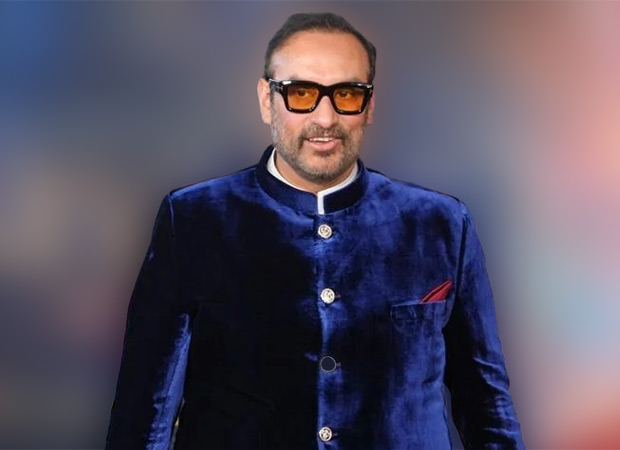
Namit Malhotra’s journey from a small post-production startup to producing a large-scale adaptation of the Ramayana took centre stage at the film’s Los Angeles premiere. Held at the David Geffen Theater inside the Academy Museum of Motion Pictures, the event brought together the film’s principal cast and creative team, along with guests eager to learn more about the project’s international ambitions.
For Malhotra, the screening was more than a major promotional occasion. It represented a personal milestone in a career shaped by visual effects, filmmaking and a long-standing goal of connecting India’s film industry with global audiences. Addressing the gathering, he described the Academy Museum venue as the right place to mark the moment, calling it his “Oscar moment.”

From a Garage Startup to a Global Film Project
Malhotra reflected on starting out at 19 with an Apple computer and a small team of collaborators. He described himself as a member of a third-generation film family who began with a modest setup, working alongside colleagues and teachers who were only a little older than him. Looking back, he said the Los Angeles event felt like the realisation of a dream—and a fitting occasion in the “City of Angels.”
His professional connection to Los Angeles began in 2007, when he moved there as part of an effort to build a company capable of working across borders. That ambition grew through DNEG, the visual-effects company associated with Malhotra’s work. The company has received eight Academy Awards, including seven in the 11 years preceding his remarks, for its contributions to films made with directors such as Christopher Nolan and Denis Villeneuve.
That background helps explain why Malhotra sees Ramayana not only as an Indian story brought to the screen, but also as a production shaped by international expertise. The film draws on talent from India and overseas, combining filmmaking, visual effects, music and performance in a project designed for audiences well beyond its home market.
Malhotra Recalls the Setbacks That Shaped His Career
The producer also spoke candidly about the financial challenges he faced during the 2008 global crisis. He said he lost 90 per cent of his wealth during that difficult period, making his return to the industry and his role in a major independent production especially meaningful.
Rather than presenting success as a straight path, Malhotra’s remarks highlighted the uncertainty behind building a company and backing a film on an ambitious scale. His story—from a young entrepreneur with limited resources to a producer leading an international epic—offered a personal context for the scale of the Los Angeles premiere.
He thanked his family, collaborators, financial backers and the Sony Pictures team for supporting the project. The acknowledgement underscored how productions of this size depend on a broad network of creative and commercial partners, from early development through international release.
Ranbir Kapoor, Sai Pallavi and Yash Introduced to the Audience
Malhotra invited director Nitesh Tiwari and the film’s leading actors onto the stage. Ranbir Kapoor plays Lord Rama, while Sai Pallavi portrays Sita. Introducing Pallavi, Malhotra stressed the central place of Sita in the story, saying that “Ram without Sita does not work.”
Yash, who plays Ravana, was introduced as the force behind the central conflict of the epic. The cast also includes Sunny Deol as Hanuman and Ravi Dubey as Lakshman. Together, the roles bring familiar figures from the Ramayana to a new screen adaptation, with the filmmakers aiming to serve both viewers who know the story well and international audiences encountering it for the first time.
The creative team also includes composer Hans Zimmer and choreographer Terry Notary, whose involvement reflects the production’s combination of Indian storytelling and international film craft. For a mythological story with a vast setting and a large cast of characters, music, movement and visual effects are central to creating a world that feels cinematic while remaining rooted in the source material.
Aiming to Share an Indian Epic with Global Audiences
Malhotra described the film as a collaboration between “the best of India and the best of the West,” brought together to create a motion picture with significance for billions of people. The statement captures the project’s dual ambition: to present a culturally important Indian epic with care while using the scale and technical resources of contemporary global filmmaking.
That balance can be a defining challenge for any adaptation of a revered story. A production must make the narrative accessible to new viewers without losing the cultural and emotional meaning that existing audiences associate with it. The involvement of Indian performers and filmmakers alongside international specialists gives the project an opportunity to approach that challenge from multiple perspectives.
The Los Angeles premiere drew a large crowd. The primary screening at the 945-seat David Geffen Theater was reportedly oversubscribed, prompting the team to arrange an additional screening space for guests. The turnout suggested strong interest in the film’s international presentation, although audience response to the finished work will ultimately become clearer as the release approaches.
‘Ramayana’ Release Plans and Languages
Directed by Nitesh Tiwari, Ramayana is being produced by Namit Malhotra’s Prime Focus Studios in collaboration with DNEG and Yash’s Monster Mind Creations. The two-part film is scheduled to begin with Part 1 on November 5, 2026, followed by Part 2 during Diwali 2027.
The planned releases in Hindi, Tamil, Telugu, Kannada and Malayalam are intended to reach audiences across India, while Sony Pictures is handling international distribution. A multilingual rollout, supported by overseas distribution, could help the film travel beyond the traditional audience for Indian mythological cinema.
For Bollywood and the wider Indian film industry, the project is also a notable example of an epic production being positioned for a global market. Its scale, cast and technical partnerships have attracted attention, but its lasting impact will depend on how effectively it brings its characters and themes to life. At the Los Angeles premiere, Malhotra’s personal story offered a reminder of the long road behind the film—and the high hopes attached to its next chapter.