Sara Ali Khan’s Kedarnath Visit Draws Religious Debate
Bollywood actor Sara Ali Khan’s recent visit to Kedarnath Temple has sparked a public debate after an Uttar Pradesh-based Islamic cleric reportedly issued a fatwa criticizing her participation in worship at the Hindu shrine. The discussion has prompted renewed attention to religious identity, personal choice and the rules that apply to visitors at one of India’s most prominent pilgrimage sites.
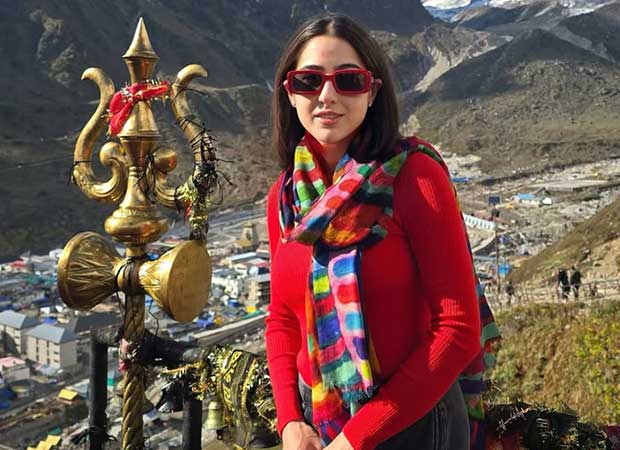
Sara visited Kedarnath on October 25. According to media reports, she travelled to the shrine by helicopter, joined devotees waiting for darshan and offered prayers with folded hands. Reports also said she took part in puja and aarti and visited the nearby Bhukunt Bhairav Temple. Photographs and videos from the trip showed the actor among other pilgrims, with some accounts noting that local women offered her a shawl in the cold weather.

Cleric’s comments prompt controversy
Maulana Mufti Shahabuddin Razvi Barelvi reportedly objected to Sara’s participation in temple rituals, arguing that Islamic Sharia does not permit Muslims to take part in religious practices associated with another faith. As quoted by Bhaskar English, the cleric said such participation amounted to “shirk” and described it as impermissible under his interpretation of Islamic law.
He also reportedly urged the actor to repent before Allah and reiterated that Muslims should not worship at a temple or adopt the religious practices of another faith. His remarks became the focus of news coverage and online discussion, with reactions reflecting a range of views about faith, public life and individual freedom.
A fatwa is generally an Islamic religious opinion or legal interpretation offered by a qualified scholar in response to a question. It should not automatically be treated as a binding ruling for every Muslim, nor as a position shared by all Islamic scholars. Interpretations of religious texts and practices vary, and the reported comments represent the view attributed to this particular cleric.
Kedarnath’s connection to Sara’s career
The Kedarnath shrine has a personal and professional connection to Sara. She made her Bollywood debut in 2018 with Kedarnath, a romantic drama set against the backdrop of the pilgrimage and starring the late Sushant Singh Rajput. The film brought the Himalayan shrine to a wide cinema audience while telling a fictional story shaped by the region’s landscape and the devastating 2013 floods.
Sara has returned to Kedarnath on multiple occasions since her debut. For many fans, the temple is therefore more than a destination associated with her public image: it is also closely linked to the beginning of her film career. Her latest visit attracted attention both because of that connection and because of the religious controversy that followed.
Kedarnath, situated high in Uttarakhand’s Garhwal Himalayas, is among the most significant Hindu pilgrimage sites in the country. The journey to the temple can involve long travel, changing weather and high-altitude conditions, making access and visitor arrangements an important part of the pilgrimage season. The shrine is part of the Char Dham circuit and draws large numbers of devotees each year.
Reports on visitor requirements
The controversy has also brought attention to reported procedures for non-Hindu visitors at the Kedarnath and Badrinath temples. According to media reports, the Badrinath-Kedarnath Temple Committee (BKTC) requires non-Hindu visitors who wish to offer prayers to submit an affidavit.
BKTC chief executive officer Sohan Singh Rangar reportedly told News18 that Sara’s team had submitted the required affidavit before her visit. The detail has added an administrative dimension to the discussion, separating the question of temple-entry procedures from the broader debate about religious doctrine and personal belief.
As with any reported policy, the precise requirements and how they are applied are matters for the temple authorities to clarify. The available reports indicate that Sara’s team followed the stated procedure, but they do not establish a wider consensus about how non-Hindu visitors should engage with the shrine.
Faith, privacy and public scrutiny
Public figures often find personal choices examined through the lens of their profession, family background and religious identity. In Sara’s case, a visit to a temple connected to her debut film quickly became a national conversation. The episode illustrates how social media and news coverage can transform a private act of devotion—or a personal visit—into a wider discussion about religious boundaries.
It is also important to distinguish between a cleric’s criticism and the actor’s own account. Sara has not, in the reports cited about the controversy, publicly responded to the fatwa. Without a statement from her, the details of her personal beliefs or the meaning she attaches to the visit should not be assumed.
The story has generated interest among Bollywood followers, religious communities and readers tracking the relationship between celebrity culture and faith in India. Beyond the immediate headlines, it raises questions about how people navigate multiple cultural influences, how religious institutions set visitor guidelines and how public debate can remain respectful when beliefs differ.
For now, Sara Ali Khan’s Kedarnath visit remains a point of discussion rather than a settled dispute. The reported fatwa reflects one scholar’s interpretation, while the temple committee’s reported affidavit requirement concerns visitor procedure. Keeping those issues distinct offers a clearer understanding of the controversy—and avoids presenting any single viewpoint as representative of every Muslim, Hindu or pilgrim.