Bollywood Legend Sholay to Return to Theaters with ‘Sholay – The Final Cut’: Fans React to Controversial Changes
In a move that has sent ripples across the Indian film industry and among die-hard Bollywood enthusiasts, the legendary film Sholay (1975), widely regarded as one of the greatest masterpieces in Indian cinema, is set for a grand re-release scheduled for December 12. Titled Sholay – The Final Cut, this reissue promises to present the film in a new light, including the much-anticipated reveal of the original ending that was never showcased in theaters before. This development has stirred considerable excitement, curiosity, and controversy among fans, critics, and industry insiders alike.

The Re-Release Sparks Debate Over Dialogue Alterations
Earlier this week, the makers of Sholay – The Final Cut uploaded the official trailer on December 5, which immediately drew attention and widespread discussion on social media platforms. What caught many viewers off guard was a subtle yet significant change in a key dialogue—one that has become iconic in Indian pop culture.
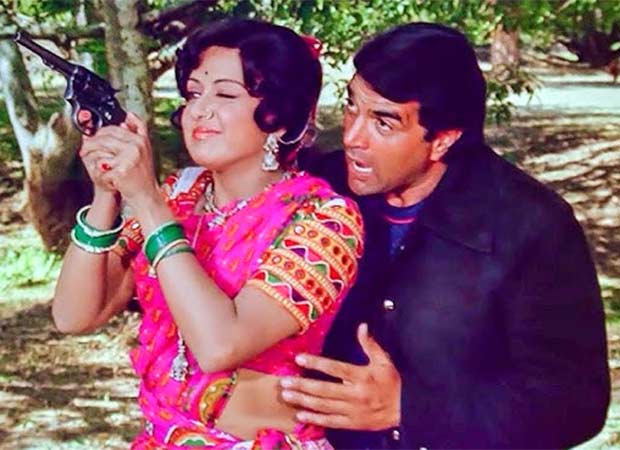
In the original 1975 version of Sholay, the character Basanti, played by Hema Malini, remarks to Veeru, played by Dharmendra, “Bade nishaanchi lagte ho” (“You seem like a big shot”). To this, Jai, portrayed by Amitabh Bachchan, responds with the witty line, “Haan, James Bond ke pote hai yeh” (“Yes, he’s the grandson of James Bond”).
However, in the trailer for Sholay – The Final Cut, the dialogue has been altered. Instead of referencing James Bond, Jai’s line now reads: “Haan, Tatya Tope ke pote hai yeh” (“Yes, he’s the grandson of Tatya Tope”). This unexpected change has shocked many fans, sparking a wave of criticism and confusion. Fans argue that such modifications tamper with the authenticity of a film that has become a cultural icon over the decades.
Reactions from Fans and Industry Experts
Several Bollywood enthusiasts and film historians have expressed their dismay over the dialogue change. A source close to the production told Bollywood Hungama, “Sholay is a film that many of us have seen multiple times; its dialogues are etched into our memories. Any alteration, especially in such a legendary film, is bound to be noticed and hurt the sentiments of millions of fans.”
The source further questioned the necessity of this change, asking, “Who authorized this? Did Ramesh Sippy, the director, or the original writers Salim-Javed approve of it? And how was the voice dubbed? Was it done by Amitabh Bachchan himself or through AI-based technology? These questions cast a shadow of doubt over the integrity of the re-release.”
Such concerns highlight the importance of preserving the original essence of Bollywood classics, especially when they hold a special place in the hearts of generations. The debate underscores broader issues about remaking or re-releasing iconic films—should they be preserved exactly as they are, or is there room for reinterpretation and modernization?
The Untold Story of the Original Ending
One of the most intriguing revelations about Sholay pertains to its original ending, which was dramatically different from the version audiences have come to know over the decades. In an exclusive interview with Bollywood Hungama, Ramesh Sippy, the film’s legendary director, shed light on the behind-the-scenes story and explained why the ending was altered at the last minute.
“For over 50 years, the version of Sholay that people remember is the one that was released in theaters,” Sippy shared. “But during the filming process, especially in 1975, India was going through the Emergency—a period of political turmoil and censorship. We couldn’t openly debate or challenge certain decisions.”
He revealed that the ending viewers are familiar with was not the original plan. “The final climax, which features the police arriving and telling Gabbar Singh’s henchmen to stop, was a typical, formulaic conclusion common in films of that era. It was a last-minute shot, and frankly, I wasn’t entirely satisfied with it,” he admitted. “The authorities insisted that the police should not take the law into their own hands, which led us to shoot a different, more conventional ending.”
Sippy’s candid insights provide a deeper understanding of the film’s creative process and how external factors influenced its final form. The revelation of the original ending has only added to the mystique of Sholay, fueling anticipation for the upcoming re-release and prompting fans to ponder how the film might have looked had the original climax been retained.
The Significance of Sholay in Bollywood History
Since its release, Sholay has been hailed as a milestone in Bollywood history, blending action, drama, music, and memorable characters into a cinematic masterpiece. Its influence extends beyond India, inspiring countless filmmakers and performers across the globe. The film’s dialogues, characters, and scenes are embedded in Indian popular culture, making it a staple reference point for decades.
The film’s success also marked a turning point in Bollywood’s storytelling approach, proving that Indian cinema could produce epic, multi-layered stories with wide appeal. The iconic performances by Amitabh Bachchan, Dharmendra, Hema Malini, and Amjad Khan as Gabbar Singh continue to be celebrated and studied by aspiring actors and filmmakers.
What Can Fans Expect from Sholay – The Final Cut?
While the controversy over dialogue changes has dominated headlines, fans are also eager to see how the re-release presents the film overall. Sholay – The Final Cut promises remastered visuals, enhanced sound quality, and the inclusion of previously unreleased footage, including the original ending. This provides a rare opportunity for newer generations to experience the film as it was originally envisioned.
Moreover, the re-release is accompanied by a series of behind-the-scenes documentaries, interviews with the cast and crew, and special features that celebrate the film’s legacy. It’s an immersive experience that aims to honor the film’s status as a Bollywood classic while inviting viewers to appreciate its historical significance and artistic brilliance.
Conclusion: A Historic Moment for Bollywood and Film Preservation
The upcoming re-release of Sholay as Sholay – The Final Cut is more than just a cinematic event; it’s a reflection of Bollywood’s rich history and enduring cultural impact. While debates over dialogue changes and the preservation of original content continue, one thing remains clear: Sholay continues to captivate audiences and inspire millions, reaffirming its place as a cornerstone of Indian cinema.
As the film prepares to hit theaters once again, fans, critics, and historians alike are reminded of the importance of safeguarding cinematic heritage—celebrating the art, storytelling, and legacy of Bollywood’s greatest classics.