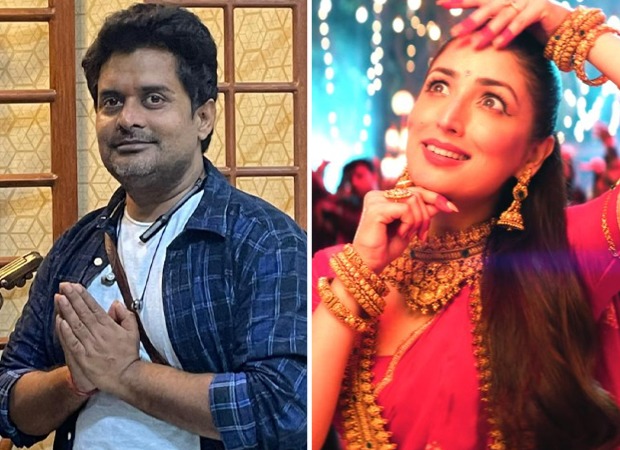

Bollywood Filmmaking Faces Critical Reflection: Tigmanshu Dhulia Questions Contemporary Trends and Storytelling Authenticity
In an era where Bollywood continues to captivate audiences worldwide with its vibrant stars and larger-than-life narratives, there is an undercurrent of concern among industry insiders about the evolving landscape of storytelling in Hindi cinema. Renowned filmmaker and actor Tigmanshu Dhulia recently voiced his candid opinions on this subject during a prominent event organized by the Editors Guild of India. His insights shed light on the growing reliance on predictable templates and the impact of commercial pressures on creative expression within Bollywood.
Critique of Modern Bollywood Narratives: Is the Plot Still Relevant?
Dhulia’s Take on the Dhurandhar Duology
One of the focal points of Dhulia’s critique was the recent Dhurandhar duology, a series of action-packed films led by Bollywood star Ranveer Singh. The films revolve around an undercover spy who infiltrates Pakistani networks, creating high-octane sequences and tense confrontations. However, Dhulia questioned whether these movies truly qualify as compelling stories.

“If you ask me about the story of Dhurandhar, I find it difficult to label it as a story,” Dhulia remarked. “The premise is about a man who is an undercover spy, goes to Pakistan, and causes chaos. But this isn’t a story in the traditional sense; it’s more of an action sequence wrapped in a thin narrative.”
His comments highlight a broader concern about the depth and substance of contemporary Bollywood films, especially those driven primarily by spectacle rather than storytelling. Dhulia’s critique invites viewers and creators alike to ponder whether Bollywood’s current obsession with high-octane entertainment is overshadowing meaningful narratives.
The Diminishing Art of Storytelling in Hindi Cinema
Dhulia further elaborated on what he perceives as a disturbing trend: the erosion of genuine storytelling in Bollywood. He argued that many filmmakers are now constrained by commercial considerations that dictate what can or cannot be depicted on screen.
“Stories are over in films,” he asserted. “The storytellers and their authentic voices are being silenced. What they want to say is often deemed unprofitable or risky, so it doesn’t get made. Instead, we see a proliferation of films following the same predictable blueprints, which hampers artistic innovation.”
This reliance on formulaic narratives, Dhulia suggests, is a direct consequence of the industry’s fixation on box-office success, often at the expense of creative diversity and cultural authenticity.
Impact of Extreme Capitalism on Bollywood and Society
Commercial Pressures and the Homogenization of Content
Dhulia attributes this phenomenon to what he describes as “extreme capitalism,” a system that incentivizes safe, proven formulas over risky, original storytelling. “When profit becomes the only goal, there’s little room for experimentation or new ideas,” he explained. “This leads to a homogenization of films, where every story feels similar, and innovation is stifled.”
Beyond the Silver Screen: A Society in Uniformity
Interestingly, Dhulia extended his critique beyond cinema, observing that this commercial-driven mindset influences not just films but also the fabric of everyday life. He noted a growing trend towards uniformity in fashion, urban identity, and even cultural expression.
“People start to look and dress the same,” he said. “Everyone sports the same haircut, the same brands, and cityscapes lose their unique character — they all begin to look alike. The essence of individual city identities and cultural diversity is fading away, replaced by a bland sameness.”
This cultural homogenization, Dhulia suggests, is a reflection of the wider societal shift driven by consumerism and corporate interests, which prioritize profit over cultural richness.
Upcoming Project: Ghamasaan and Its Significance
A New Film Set in the Heart of Bundelkhand
Amidst these reflections on Bollywood’s creative trajectory, Dhulia is also busy promoting his upcoming directorial project, Ghamasaan, set to premiere directly on ZEE5 on September 11. This film promises to be a compelling addition to his filmography, with a narrative rooted in the rugged terrain of Bundelkhand — a region often overlooked in mainstream Bollywood storytelling.
Plot and Cast
Ghamasaan features a gripping storyline centered around Maharaj, portrayed by Arshad Warsi, a feared dacoit leader who commands respect and fear in equal measure. Pratik Gandhi plays Aditya, an STF officer tasked with capturing Maharaj, leading to a tense and complex confrontation. As the operation unfolds, it uncovers deeper layers of political corruption, transforming what seems like a straightforward manhunt into a nuanced exploration of power, morality, and social injustice.
The film’s setting in Bundelkhand not only provides a stark, authentic backdrop but also signifies Dhulia’s commitment to telling regional stories that reflect India’s diverse cultural landscape. After being delayed for nearly two years, the film’s digital release is eagerly awaited by audiences and critics alike, eager to see how Dhulia’s storytelling prowess continues to evolve in the digital age.
Bollywood’s Future: A Call for Authenticity and Diversity
Industry Trends and Audience Expectations
Dhulia’s observations resonate with ongoing debates within Bollywood about the balance between commercial viability and artistic integrity. As the industry grapples with changing audience preferences shaped by streaming platforms and global content, there is a growing call for more authentic, innovative stories that transcend stereotypes and predictable plotlines.
Many industry insiders believe that Bollywood’s future hinges on embracing diversity — not just in narratives but also in casting, regional storytelling, and cultural representation. The success of films like Ghamasaan underscores a desire among audiences for content that is rooted in authenticity and regional identity, which can offer fresh perspectives beyond the familiar Bollywood formulas.
Broader Cultural Implications
Furthermore, Dhulia’s critique underscores the need to preserve India’s rich cultural tapestry amid the homogenizing influence of capitalism. As Bollywood continues to grow as a global entertainment powerhouse, it has the potential to be a platform for promoting India’s diverse traditions, languages, and stories. Instead, an over-reliance on safe, formulaic content risks diluting the cultural vibrancy that makes Bollywood unique.
Conclusion: A Time for Reflection and Renewal in Bollywood
As Tigmanshu Dhulia’s candid insights remind us, Bollywood stands at a crossroads. The industry must decide whether to continue down the path of predictable, commercially driven films or to embrace a renaissance of authentic storytelling that celebrates India’s regional diversity and cultural richness. The rise of digital platforms like ZEE5 offers an opportunity to showcase stories that are more nuanced, regional, and socially relevant — a chance for Bollywood to reinvent itself beyond the clichés.
Ultimately, the future of Bollywood depends on nurturing storytellers who dare to challenge the status quo and bring forth narratives that resonate with the complexities of modern India. As audiences increasingly seek content that is meaningful and diverse, the industry’s commitment to authentic storytelling will determine whether Bollywood continues to thrive as a global cultural phenomenon or becomes a shadow of its former creative vibrancy.