Rahul Bose on Shaurya’s Controversial Climax: “I Haven’t Moved One Inch”
More than a decade after its release, the 2008 film Shaurya continues to invite discussion about its politics, performances and memorable courtroom drama. One scene in particular has endured: a charged climax monologue delivered by Kay Kay Menon as Brigadier Rudra Pratap Singh. The performance helped make the film’s final act unforgettable—but the character’s rhetoric has also become a point of contention as audiences revisit the story through changing social and political perspectives.
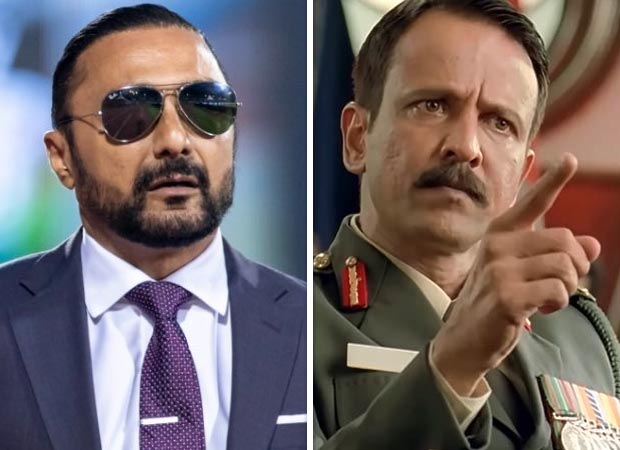
In an exclusive conversation with Bollywood Hungama, Rahul Bose reflected on the debate surrounding Menon’s character and shared why he remains committed to his personal values. Bose played Army defence lawyer Major Siddhant Chaudhary, whose pursuit of justice ultimately exposes the truth behind the case. He also spoke about a new film he is writing, describing it as an action entertainer with humour and a distinctly Indian sensibility.

Why Shaurya Still Sparks Debate
Directed by Samar Khan, Shaurya was praised for its subject, writing, performances and treatment of a military courtroom drama. At the centre of the story is Brigadier Rudra Pratap Singh, a senior officer whose forceful worldview is challenged during a military trial. Menon’s climactic speech is among the film’s most discussed moments, in large part because it is delivered with such intensity and conviction.
The monologue has since taken on a life beyond the film. While some viewers admire Menon’s commanding performance, others have raised concerns about the character’s hateful and divisive views. A section of the audience has even come to regard the brigadier as a heroic figure, prompting criticism from people who argue that the character’s ideology should not be mistaken for the film’s moral position.
That distinction is central to the conversation: a performance can be compelling without making the character’s beliefs admirable. Menon’s portrayal gives the antagonist a powerful presence, while the film’s courtroom conflict asks viewers to examine the consequences of his actions and the principles that should guide those in positions of authority. The tension between performance and message is one reason Shaurya remains relevant to Bollywood audiences today.
Rahul Bose on Holding On to Personal Values
Asked how he feels about Brigadier Rudra Pratap Singh being viewed as a hero by some viewers, Bose said that public attitudes and cultural context can shift over time, but that he does not believe his own basic values should change with them.
“With changing times, the context changes and values change. But my core values have never changed and will never change,” Bose said. He added that the important thing, in his view, is to maintain one’s balance and remain grounded in principles such as non-violence and love, even as the surrounding world moves in different directions.
To explain how quickly public advice can change, Bose compared shifting social opinions to changing claims about food. “One day we are told that tomatoes are good for your health. The next day, we are told to avoid tomatoes as they’re unhealthy. A day later, we are asked to avoid tomatoes altogether!” he said.
For Bose, the comparison reflects a broader point about staying clear-headed amid changing trends and arguments. He said people should know themselves, hold on to what they believe is true and allow other things to evolve without abandoning their deepest convictions. “I have not moved one inch from who I was and what I am,” he said, adding that he intends to remain that way.
A New Action Film Is in the Works
Bose has also begun developing his next project as a filmmaker. The actor, who previously directed Everybody Says I’m Fine in 2001 and Poorna in 2017, confirmed that he is writing an action film. He described the project as clever and humorous, while making clear that its comedy will not rely on the kind of broad, random gag associated with the phrase “Udta Teer.”
Instead, Bose said the movie will combine humour with a mass-oriented appeal and offer something he believes Indian audiences have not seen before. His description points towards a film designed to balance entertainment with an inventive approach—an ambition that could give the project a distinctive place in the current Bollywood landscape.
Although Bose did not reveal a title, cast or production timeline, the announcement marks an intriguing new chapter in his work behind the camera. His earlier films have explored very different subjects, and a massy action story would represent another shift in genre. For now, the project remains in the writing stage, but Bose’s comments suggest he is aiming for a lively, original experience rather than a conventional action formula.
Why the Conversation Around Shaurya Matters
The renewed debate around Shaurya illustrates how a film can be interpreted differently as audiences and public conversations change. A scene once remembered primarily for its dramatic force may later be examined more closely for the beliefs it expresses and the way viewers respond to them. That does not erase the craft behind a performance; instead, it invites a more thoughtful distinction between an actor’s skill, a character’s ideology and the story’s larger argument.
Bose’s response keeps the focus on personal responsibility: audiences may reassess films, characters and cultural values, but individuals still have to decide which principles they are unwilling to compromise. Meanwhile, his upcoming action film offers a fresh creative prospect for fans interested in his work as a director. Together, the discussion of Shaurya and Bose’s next project show how Bollywood remains a space where entertainment, social debate and artistic reinvention often meet.