
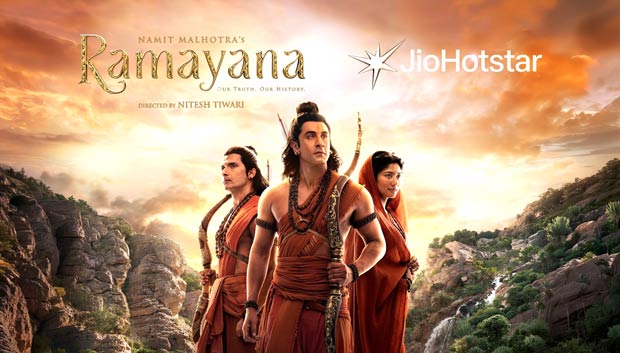
Ramayana: Part One to Stream on JioHotstar After Its Theatrical Run
Ramayana: Part One, the ambitious live-action adaptation of the Indian epic, is set to reach audiences in two ways. After its exclusive cinema release, viewers in India will be able to purchase the film separately through JioHotstar’s on-demand, pay-per-view service. The arrangement gives audiences another way to watch the film while preserving its planned big-screen debut.
Directed by Nitesh Tiwari and produced by Namit Malhotra’s Prime Focus Studios, the film is scheduled to open worldwide in cinemas on November 5, 2026, during the Diwali period. It is planned for release in Hindi, Tamil, Telugu, Kannada, Malayalam and English, with IMAX 3D screenings intended to deliver a large-scale theatrical experience.

A second viewing option after cinemas
JioHotstar’s pay-per-view model will allow Indian viewers to buy access to Ramayana: Part One individually after its theatrical window. Rather than relying only on a standard subscription catalogue, this format lets audiences pay for the specific film they want to watch. JioHotstar says the title will be available on supported devices and in the highest quality the service can provide.
The platform and production team have not yet announced the digital release date or the price of the on-demand rental or purchase. Those details are likely to be confirmed closer to the end of the film’s cinema run. The theatrical window will give cinemas the first opportunity to present the story, while the later digital option may make it easier for families and viewers outside major cinema markets to watch at home.
The partnership reflects a broader shift in film distribution: major releases increasingly combine exclusive theatrical launches with carefully timed digital access. For a story with a wide audience across generations and regions, a separate on-demand option could help extend the film’s reach without replacing the communal experience of seeing it on a cinema screen.
JioStar calls the epic a cultural legacy
Nita M. Ambani, Chairperson of JioStar, described the Ramayana as a foundational story in India’s cultural life and said the partnership would help bring the new adaptation to families across the country.
“Ramayana is one of India’s greatest civilisational treasures—a story that has shaped our conscience, inspired our imagination, and guided the way we live for centuries,” she said. Ambani added that JioHotstar aims to use technology to make major stories more accessible, and said the platform was honoured to present the film’s cinematic vision to a new generation.
Her comments point to the central challenge—and opportunity—of adapting a text known to audiences in many forms. The epic’s themes of duty, love, courage and goodness have travelled through literature, theatre, television, performance traditions and family storytelling. A new film can introduce those ideas to younger viewers while inviting longtime audiences to revisit a familiar narrative through a different visual and dramatic lens.
Why the film is designed for the big screen
Producer Namit Malhotra said the filmmakers want audiences to experience the movie on the largest screen possible, particularly in IMAX 3D. At the same time, he noted that cinema access is not equal across the country, making a later home-viewing option an important part of the release plan.
“I believe Ramayana should be experienced on the biggest screen possible, in IMAX 3D. But our country’s cinema infrastructure cannot reach everyone who holds this epic close,” Malhotra said. He described JioHotstar as a natural partner for extending the film’s reach after its theatrical run, pointing to the platform’s ability to connect audiences through entertainment and technology.
The approach aims to balance spectacle with accessibility. Large-format cinema can highlight the scale of the production, while on-demand viewing may suit people who cannot easily travel to a theatre, prefer watching at home or want to revisit the story with family. The two release formats serve different needs rather than offering identical experiences.
Star cast and creative team behind the adaptation
Ramayana: Part One is the first instalment in a planned two-part live-action film series directed by Nitesh Tiwari. Shridhar Raghavan adapted the screenplay from Valmiki’s epic. The project is being produced by Prime Focus Studios in association with DNEG and Yash’s Monster Mind Creations.
The principal cast includes Ranbir Kapoor as Lord Rama, Sai Pallavi as Sita, Yash as Ravana, Sunny Deol as Hanuman and Ravie Dubey as Lakshman. Arun Govil, Lara Dutta, Rakul Preet Singh, Vivek Oberoi, Kunal Kapoor and Kajal Aggarwal are also part of the ensemble.
The production brings together an international and Indian creative team. Composers Hans Zimmer and A. R. Rahman are collaborating on the music, while Ravi Bansal and Ramsey Avery have worked on production design. Action sequences have been choreographed by Terry Notary and Guy Norris. The combination of performers, composers and design specialists signals the scale of the filmmakers’ ambition for a story that spans kingdoms, battles and deeply personal choices.
What audiences can expect next
For now, the confirmed details are the worldwide cinema release on November 5, 2026, the planned IMAX 3D presentation, the six-language release and a later pay-per-view option on JioHotstar for Indian viewers. The platform’s pricing and post-theatrical availability date remain unannounced.
As anticipation builds, the film’s challenge will be to honour the emotional and cultural importance of the Ramayana while presenting it as a compelling contemporary cinematic experience. Its theatrical-first strategy, high-profile cast and eventual digital access make it one of the most closely watched upcoming projects in Bollywood and Indian cinema. The JioHotstar partnership also ensures that, after its journey through theatres, the film can reach audiences who want to experience this new interpretation from home.