
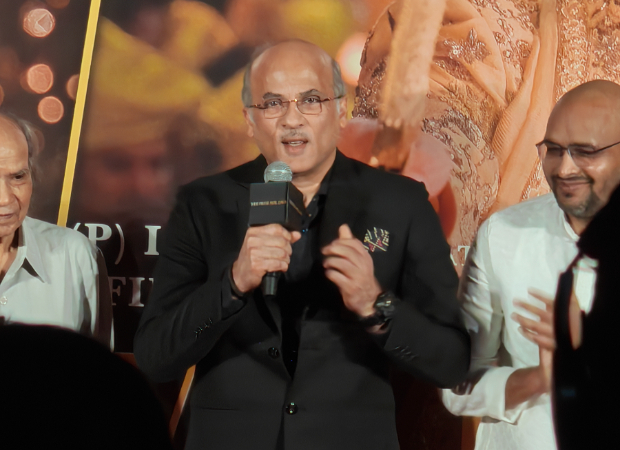
Sooraj Barjatya celebrates four decades of filmmaking at Yeh Prem Mol Liya trailer launch
Bollywood filmmaker Sooraj Barjatya turned the trailer launch of Yeh Prem Mol Liya into a warm celebration of family, storytelling and the audiences who have followed his work for 40 years. Held at a multiplex in Mumbai, the event brought together the film’s cast and crew, including Ayushmann Khurrana, Sharvari and veteran actor Anupam Kher.
Barjatya addressed the gathering with gratitude, reflecting on the remarkable longevity of his career and the continued interest in his films. “I feel so grateful that I have been making films for 40 years. Yet people come to see this cinema!” he said. From the audience, Kher responded with a cheerful shout: “That’s because you are Sooraj Barjatya!” The exchange captured the affectionate atmosphere of the event and the close creative relationships behind the film.

Barjatya thanked guests for attending and acknowledged the positive response to the film’s music and its straightforward, family-centred approach. The director is widely associated with stories about relationships and shared values, and his remarks suggested that Yeh Prem Mol Liya continues to draw on those familiar themes while exploring a contemporary marriage.
Sooraj Barjatya’s advice to young filmmakers
A major focus of Barjatya’s speech was the role of producers in supporting a film’s story. He introduced the senior members of his family who are backing the project, describing them as the foundation of his filmmaking journey. In his view, their contribution extends beyond financing: they have encouraged him to prioritise the narrative rather than a film’s appearance or short-term commercial expectations.
“These are our backbones,” he said, explaining that the producers had taught him to trust the story and not become consumed by opening-day figures. He shared a Hindi saying to make his point: “Har picture ki apni kundli hoti hain.” Every film, he suggested, has its own path. Some find momentum quickly, while others take longer to connect with viewers—but a film’s journey cannot always be judged by its first few days in cinemas.
That perspective offers a timely message for emerging filmmakers working in an industry where box-office performance is often discussed immediately after release. Barjatya’s advice was to concentrate on making a compelling film rather than allowing early numbers to define its value. A story’s audience may grow over time, he noted, and patience is part of the creative process.
He also stressed that entertainment should remain central to filmmaking. Recalling the festive-season audience, he observed that people may use their Diwali bonus to enjoy a cinema outing, making it important for a film to offer a satisfying experience. The point was not simply to make a movie with a familiar setting, but to give viewers a reason to spend their time and money at the theatre.
Barjatya’s third lesson was about resilience. One unsuccessful film does not have to end a filmmaker’s prospects, he said, because another opportunity can follow. In his words, it is the story that ultimately succeeds or falls short—not necessarily the person who made it. The remark reflected a belief in creative persistence and the possibility of learning from each project.
A filmmaker finding greater creative freedom
The director also spoke candidly about how his own ambitions have changed with age and experience. When he was younger, he said, he often thought about whether a film would rank first, second or third. Now, at 61, he feels less constrained by those comparisons. Rather than focusing on a position in the box-office race, he hopes the film will resonate with viewers.
That shift is significant in a career shaped by popular Hindi cinema and enduring audience expectations. Barjatya’s comments suggest that creative satisfaction can evolve over time: early career success may be measured through rankings and recognition, while later work can be guided more by personal freedom and the emotional connection a story creates.
Audiences who have grown up with his films
One of the most personal moments came when Barjatya thanked the moviegoers who have returned to watch his films across generations. He said he had seen many of the same people come back over the years—first as young viewers, and later accompanied by their grandmothers and other family members. Watching those audiences grow up alongside his career, he said, has been deeply meaningful.
The observation speaks to the lasting appeal of family-oriented Bollywood films. For some viewers, going to a Barjatya movie is not only about seeing a new release; it is also connected to shared memories, family outings and the experience of watching stories together. That continuity may help explain why the filmmaker’s work continues to attract audiences across age groups.
Star-studded gathering for the new family drama
The Mumbai trailer launch was attended by a broad group of performers and industry figures. Alongside Khurrana, Sharvari and Kher were Swanand Kirkire, Geeta Agarwal Sharma, Krish Rao, Shruti Seth, Supriya Pathak Kapur, Seema Pahwa, Surbhi Tiwari, Saumya Tandon, Shaad Randhawa, Jameel Khan and child actor Ashnoor Kaur Kuckreja. Director Sooraj Barjatya attended with producers Kamal Kumar Barjatya, Ajit Kumar Barjatya, Neha Barjatya, Mahaveer Jain, Devansh Barjatya and Avnish Barjatya.
The film’s title and trailer positioning point towards a story about marriage in a modern setting, while the launch remarks highlighted the values of entertainment, relationships and family connection that have long been associated with Barjatya’s cinema. With Ayushmann Khurrana and Sharvari leading the cast, the film brings together a director known for ensemble family stories and actors associated with contemporary Bollywood roles.
Yeh Prem Mol Liya is scheduled to release in cinemas on November 27. As audiences prepare to see the full story, Barjatya’s reflections at the trailer launch have already offered a glimpse into the ideas behind the project: trust the story, make the experience entertaining and allow a film to find its own audience in its own time.