Bollywood Controversy Sparks Legal Battle Over Film Promotion and Celebrity Rights
In a significant development within the Bollywood industry, a high-profile legal confrontation has emerged involving film producer Amit Jani, the Delhi High Court, and Bollywood superstar Salman Khan. The dispute centers around the promotional activities of the upcoming film Kala Hiran: The Battle for Legacy, which has drawn attention not only for its content but also for its implications on celebrity personality rights and artistic freedom.
Legal Challenge to the Delhi High Court’s Interim Order
Recently, Amit Jani, under the banner of Jani FireFox Films, filed an appeal before the Supreme Court of India challenging the Delhi High Court’s interim order that mandated the removal of the film’s teaser and related promotional materials. The case has quickly garnered media interest, highlighting the complex intersection of intellectual property rights, celebrity persona protections, and freedom of expression within Bollywood’s vibrant cinematic landscape.

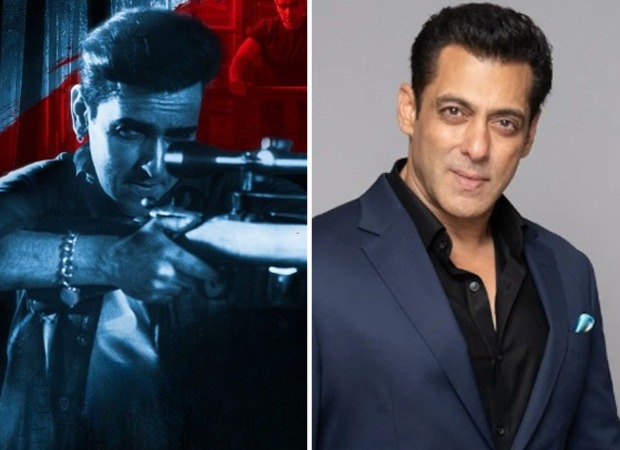
The controversy ignited when the teaser for Kala Hiran was released on July 17, 2023. The promotional clip drew widespread attention for what critics and legal authorities perceived as a provocative reference to Salman Khan’s ongoing blackbuck poaching case, a legal saga that has been a matter of public debate and media scrutiny for years. The teaser depicted a courtroom scenario involving a superstar accused of killing a blackbuck, with dramatized sequences that hint at real-life events associated with Salman Khan.
Allegations of Personality Rights Violations
Salman Khan, one of Bollywood’s most prominent actors, swiftly moved to protect his personal and professional reputation. He alleged that the teaser unlawfully exploited his personality without his consent, thereby infringing upon his legal rights. His plea argued that the teaser depicted a fictional character named Ayan Khan, whose portrayal appeared to be a thinly veiled caricature of Salman, including references to his blockbuster films Dabangg and Sikandar. Furthermore, the promotional material incorporated elements related to his pending legal case, which Salman contended could harm his image and reputation.
The Delhi High Court, in its interim order, agreed with Salman Khan’s concerns and directed the film’s makers to remove all promotional content related to Kala Hiran. The court observed that the content prima facie violated the actor’s personality rights and could cause irreparable damage, prompting a temporary censorship of the teaser and other promotional activities.
Broader Implications for Bollywood and Artistic Freedom
This legal tussle has broader implications for the Bollywood industry, especially concerning the rights of celebrities versus artistic expression. Amit Jani’s appeal emphasizes that the court’s order could set a dangerous precedent, where the personality rights of public figures are weaponized to stifle legitimate artistic, journalistic, or historical representations of real-life events.
In his appeal, Jani’s legal team argued that accepting Salman Khan’s position would create a dangerous precedent, allowing celebrities to silence filmmakers and storytellers under the guise of protecting personality rights. They contended that such a move could lead to a chilling effect on independent filmmaking and journalism, ultimately hindering creative expression on matters of public interest—topics that are often dramatized or fictionalized for cinematic storytelling.
They further highlighted that personality rights should not be used as a tool for private censorship, especially when the content in question pertains to publicly known events and societal issues. This debate touches on the delicate balance between individual rights and the collective right to free expression—a recurring theme in Bollywood’s evolving legal landscape.
Salman Khan’s Perspective and Upcoming Projects
Salman Khan’s legal action underscores the importance of safeguarding an actor’s reputation, especially in an era where social media and digital marketing amplify the reach and impact of promotional content. The actor maintains that the teaser’s content was a commercial exploitation of his persona without his authorization.
In terms of his career, Salman Khan remains one of Bollywood’s most bankable stars. His recent film Sikandar was well-received, and he is set to star in several upcoming projects. These include a new film directed by Vamshi Paidipally, produced by Dil Raju, and a notable role in the Saudi Arabian film 7 Dogs, scheduled for release in India on August 21. Additionally, Salman is involved in the production of Maatrubhumi: May War Rest in Peace, directed by Apoorva Lakhia, reflecting his continued influence and presence in Bollywood’s cinematic scene.
The Future of Bollywood Legal Cases and Creative Expression
This case exemplifies ongoing tensions within Bollywood regarding the boundaries of celebrity rights and the freedom of artistic expression. As Bollywood continues to evolve as a global entertainment hub, filmmakers, actors, and legal authorities are increasingly navigating complex issues related to intellectual property, privacy, and the right to depict real-life events.
The outcome of this legal battle could have lasting repercussions, potentially shaping how promotional content is crafted and vetted in Bollywood. It raises critical questions about the extent to which celebrities can control their public image and how the industry can balance respect for individual rights with the need for vibrant, truthful storytelling.
Conclusion: A Landmark Moment for Bollywood’s Legal and Creative Landscape
As the Supreme Court prepares to hear Amit Jani’s challenge, the Bollywood industry watches closely. This case highlights the need for clear legal frameworks that protect both the rights of individuals and the integrity of artistic expression. It underscores the importance of nuanced judgments that respect the complexities of celebrity persona rights while fostering a creative environment where filmmakers can explore bold, socially relevant narratives without fear of censorship.
Ultimately, this controversy serves as a reminder of Bollywood’s dynamic nature—where entertainment, law, and societal values intersect—and the ongoing evolution of its legal landscape as it strives to balance respect for individual rights with the freedom to tell compelling stories that resonate with audiences worldwide.